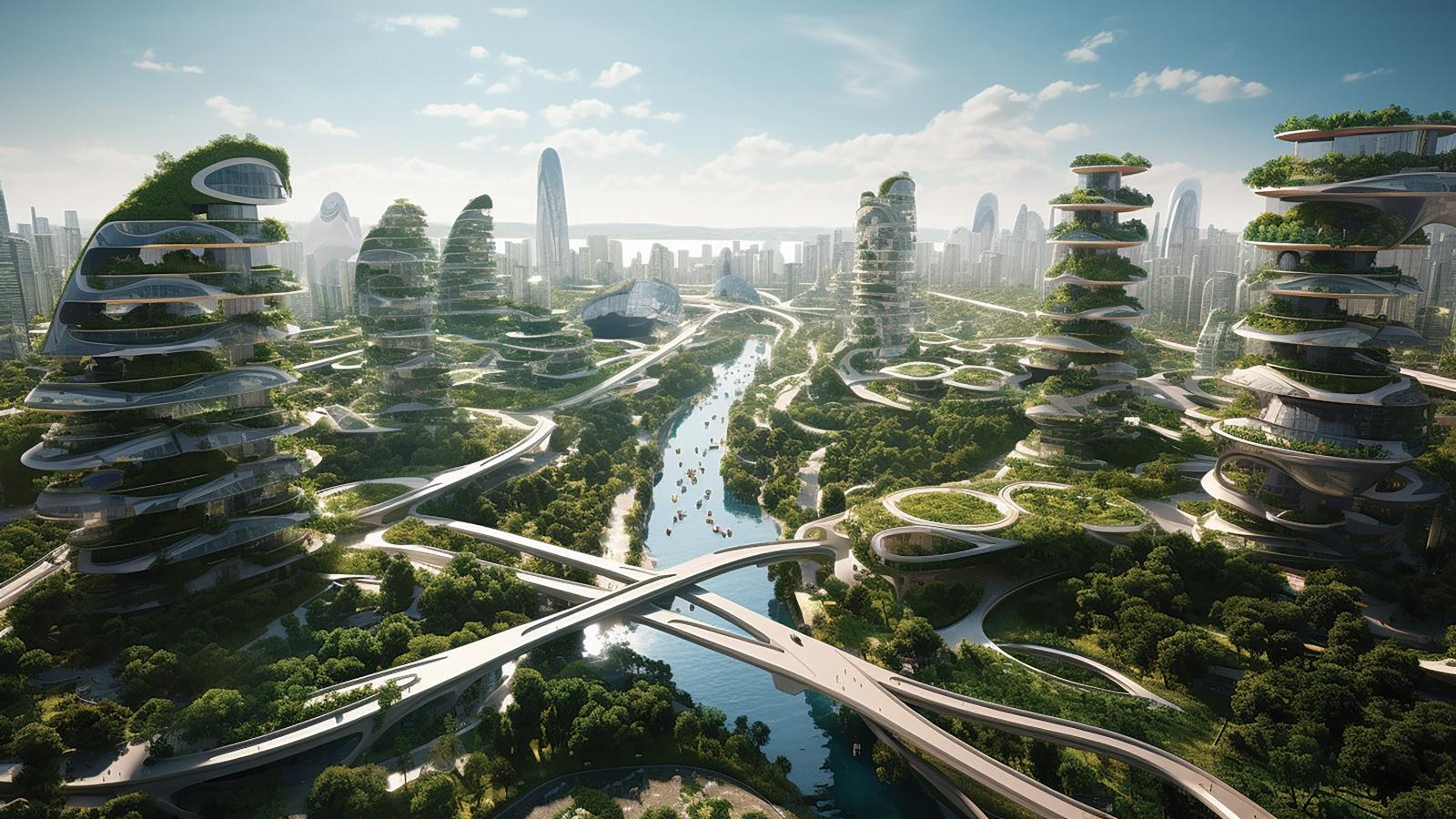
Image: Concept study for a climate-resilient, landscape-integrated city — supplied to WAAR
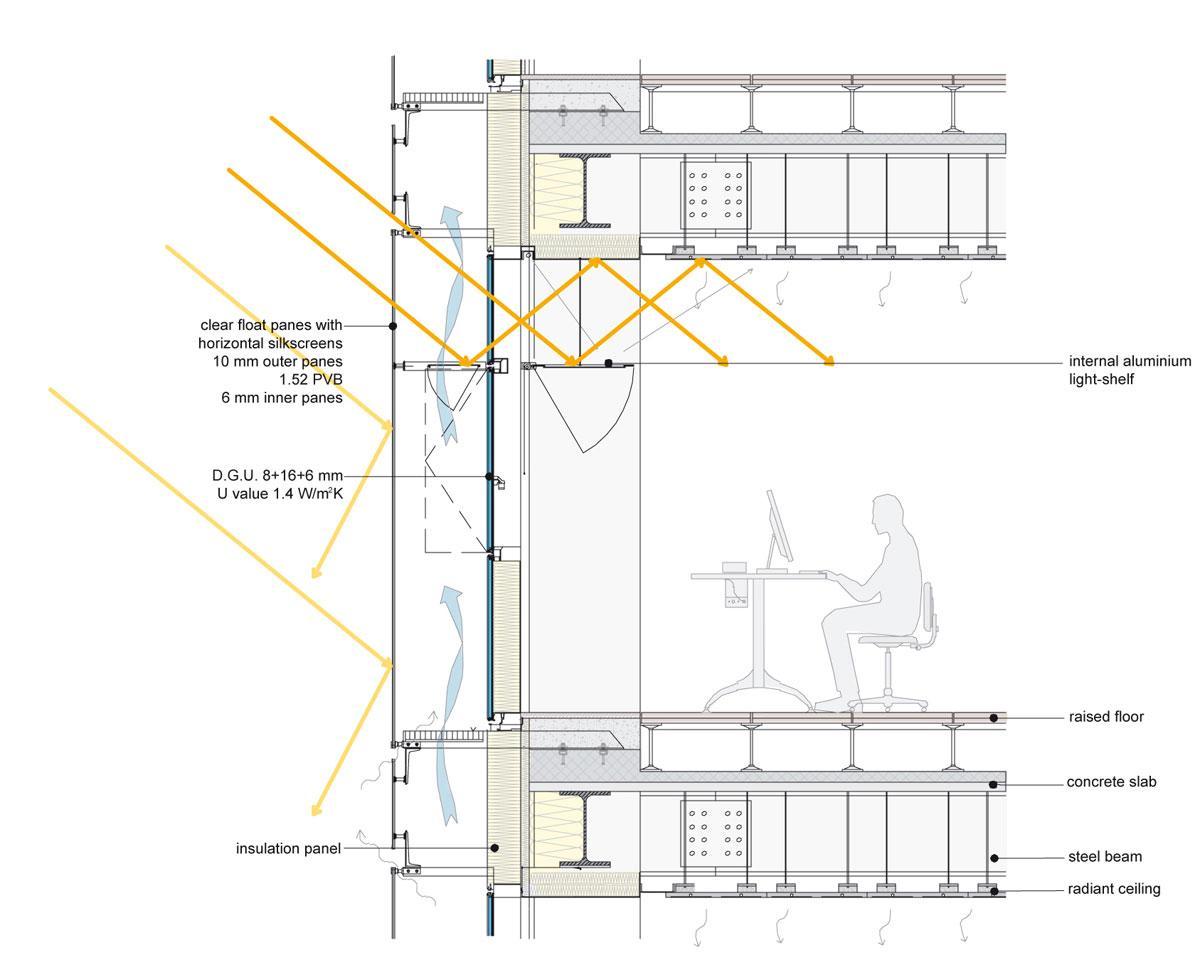
Illustration: High-performance double-skin facade and daylight-control section — supplied to WAAR
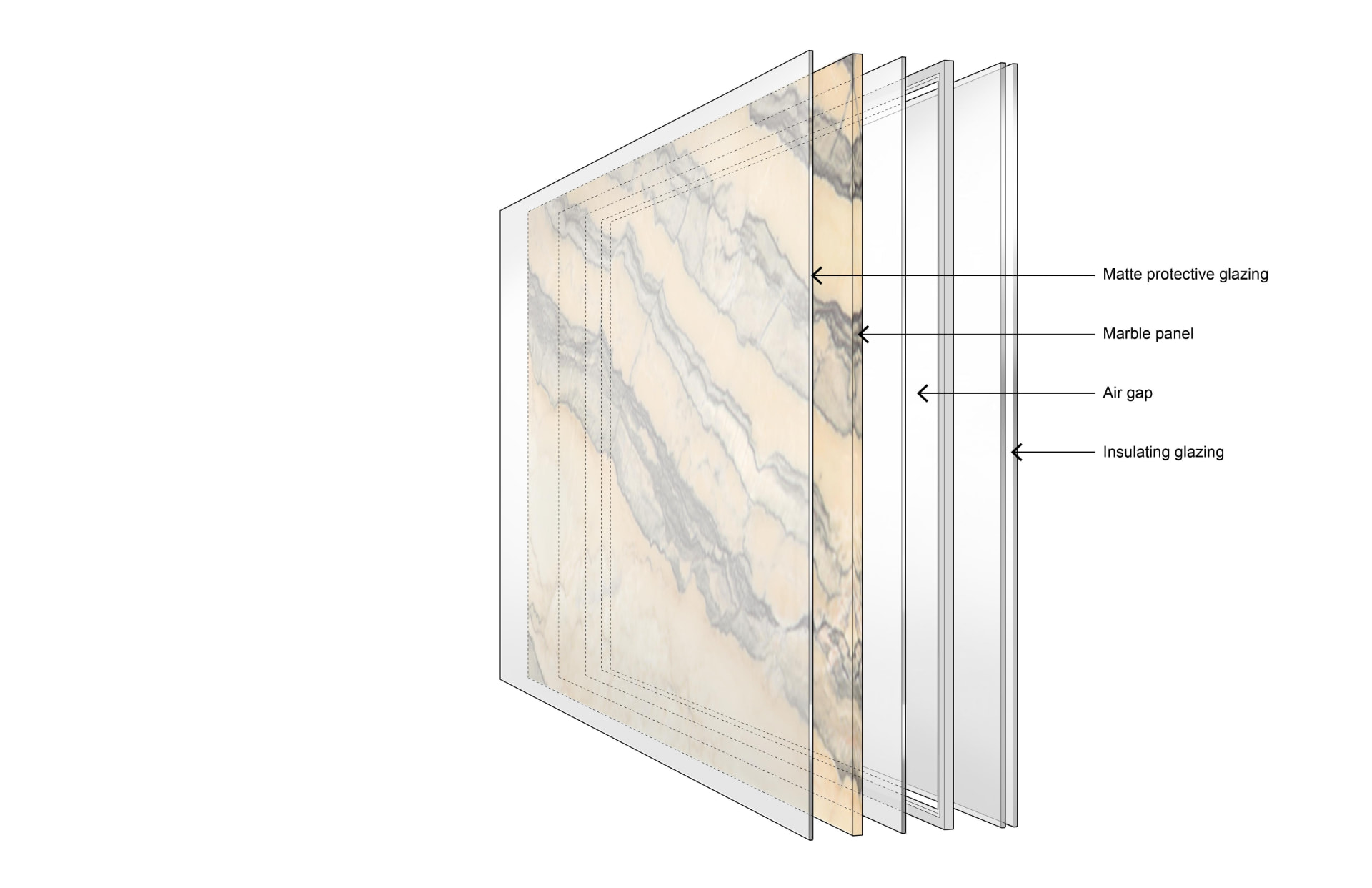
Illustration: Layered stone-and-glass high-performance envelope — supplied to WAAR

Illustration: A connected, energy-conscious future Dubai — supplied to WAAR
The New Age of Resilient Architecture
WAAR Editorial · 4 min read
Architecture has always responded to the world around it. But as that world becomes more unpredictable, the definition of a successful building is changing.
Beauty, functionality and efficiency remain essential. Yet the buildings of tomorrow will need to do more: withstand extreme conditions, protect critical infrastructure, manage enormous energy demands and continue operating when the systems around them are disrupted.
Welcome to the age of resilient architecture.
AI IS CREATING A NEW KIND OF BUILDING
Few technologies are changing architecture as rapidly as artificial intelligence. Behind every AI application is a physical infrastructure of servers, power systems and cooling equipment. As demand for computing grows, data centres are evolving from highly specialised technical facilities into some of the world's most important infrastructure projects.
The UAE is at the centre of this transformation. Its planned 5GW AI infrastructure network is being reconsidered with greater emphasis on resilience and physical security, including the potential use of underground facilities and blast-resistant construction.
This represents a major shift in architectural thinking. The data centre is no longer simply a building that houses computers. It is a building whose entire purpose is to keep intelligence running.
DESIGNING FOR A LESS PREDICTABLE WORLD
Resilience was once largely associated with structural engineering — making buildings capable of surviving earthquakes, storms or other natural disasters. Today, the concept is much broader.
Extreme heat, water stress, energy disruption, cyber threats and geopolitical uncertainty are forcing designers to think about how buildings behave when normal conditions disappear.
A resilient building is therefore not simply one that survives a crisis. It is one designed to continue functioning through it. That means greater redundancy, smarter systems, stronger building envelopes and infrastructure that can adapt rather than simply react.
THE RETURN OF THE UNDERGROUND
The future of architecture may also take us in a direction that feels surprisingly ancient: underground. As critical infrastructure becomes more valuable, placing certain facilities below ground can offer potential advantages in protection, thermal stability and land efficiency.
The UAE's consideration of underground elements for AI infrastructure demonstrates how the priorities of critical architecture are evolving. Tomorrow's most important building may not always be the one that dominates the skyline. Some of the most important architecture may exist beneath it.
MATERIALS WILL HAVE TO DO MORE
Resilient architecture will inevitably create new opportunities for the building-products industry. Facades, glass, concrete, insulation, structural systems and membranes will increasingly be judged not simply by appearance and price, but by performance.
Can a facade reduce heat gain? Can materials withstand increasingly demanding environments? Can critical systems be protected? Can components be repaired or replaced without shutting down an entire facility?
The next generation of architectural products will not merely make buildings look better. They will make buildings perform better. For manufacturers and innovators, this creates an enormous opportunity to develop products that combine aesthetics with measurable resilience.
THE ENERGY CHALLENGE
AI is also changing the relationship between architecture and energy. High-performance computing consumes enormous quantities of electricity and produces significant heat. Removing that heat requires sophisticated cooling systems — and cooling itself consumes energy.
For the UAE, where cooling is already fundamental to the built environment, the challenge is particularly significant. The buildings of tomorrow may therefore operate more like integrated energy ecosystems, combining intelligent controls, advanced cooling, renewable generation, storage and highly efficient infrastructure.
Architecture is becoming increasingly inseparable from energy engineering and technology.
A NEW ROLE FOR THE ARCHITECT
Perhaps the greatest change is happening within the profession itself. The architect of the future will still care about proportion, light, materiality and human experience. But increasingly, architects will also need to understand energy, digital infrastructure, climate adaptation and building performance.
This does not make architecture less creative. It makes the challenge more ambitious. The architect is no longer designing only the spaces people occupy. They are helping design the systems that allow those spaces — and entire cities — to function.
DUBAI'S NEXT ARCHITECTURAL CHAPTER
Dubai has built its global identity around ambition: extraordinary towers, innovative developments and projects that challenge conventional ideas about cities. The next chapter could be defined by something less visible but arguably more important: intelligence and resilience.
The UAE's investment in AI infrastructure, advanced cooling and sustainable data centres is already creating a new architectural ecosystem. Dubai's Warsan Green Data Centre, for example, is being developed around clean energy, AI infrastructure and advanced digital systems, with capacity exceeding 100MW.
This gives the region an opportunity to become more than a showcase for spectacular architecture. It can become a laboratory for the resilient city of the future.
WAAR PERSPECTIVE
The architecture of tomorrow will not be defined by technology alone. It will be defined by how intelligently technology, design, materials, energy and human needs are brought together.
The greatest buildings of the next decade may not simply be the tallest, most expensive or most visually dramatic. They may be the ones that adapt, protect, conserve and continue to perform when the world around them changes.
Because the ultimate measure of future architecture may no longer be simply what we can build. It may be what we can build that is ready for whatever comes next.