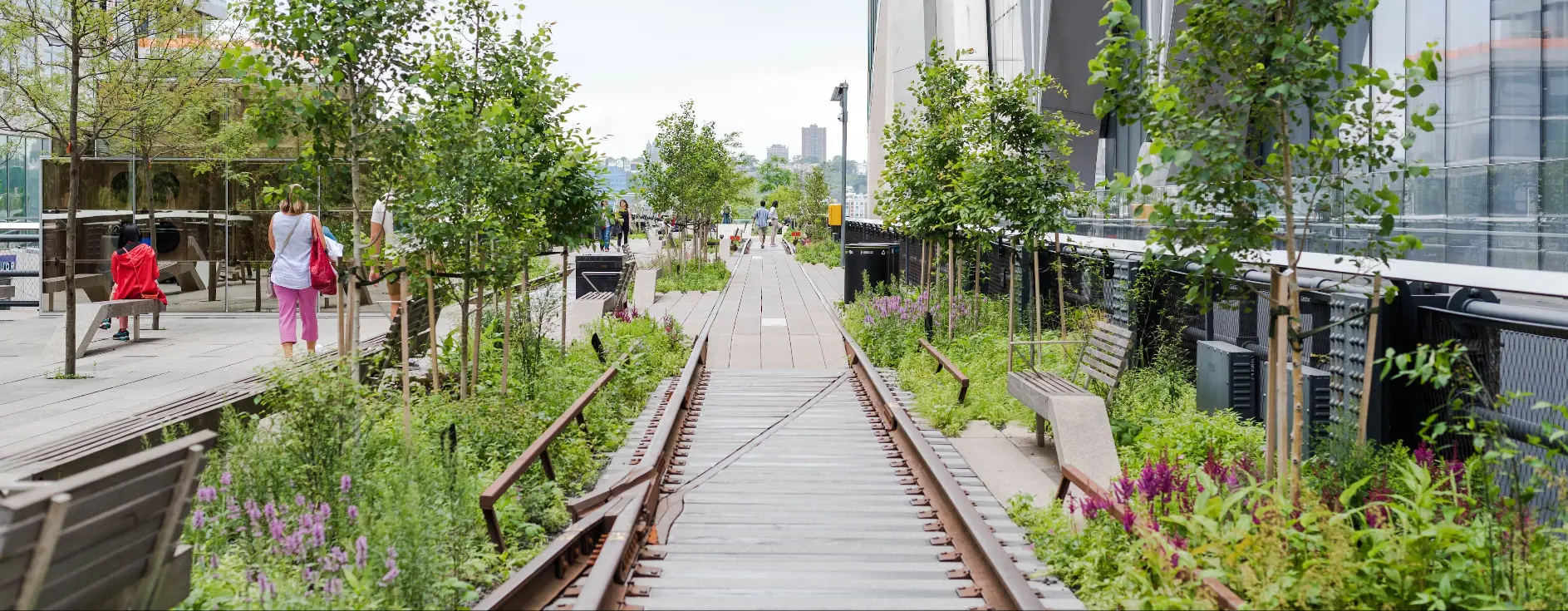
Image: The High Line, New York — supplied to WAAR
The High Line Effect: How an Abandoned Railway Rewrote City-Making
WAAR Editorial · 2 min read
The High Line converted a derelict elevated freight line on Manhattan's West Side into a linear public park, opening in phases from 2009. James Corner Field Operations and Diller Scofidio + Renfro designed the park, with planting by Piet Oudolf. They kept rails visible and drew on the self-seeded landscape that had colonised the structure — giving the park its particular quality of a ruin still growing.
The design moves are quieter than the fame suggests: a peel-up paving system where planting and path interleave, benches that rise out of the deck, and sightlines composed so that the city appears in framed episodes rather than continuously.
Its influence can be seen in later elevated parks such as Seoul's Seoullo 7017 and Chicago's 606. Paris's Coulée verte, which opened earlier, is a predecessor rather than a result of the High Line. Together, these projects demonstrate different approaches to reusing obsolete infrastructure.
The honest coda is economic. Property values along the corridor rose sharply after opening, and the park has become a standard case study in green gentrification. The lesson cities have been slower to adopt is that the park and the affordable-housing policy have to be designed together.