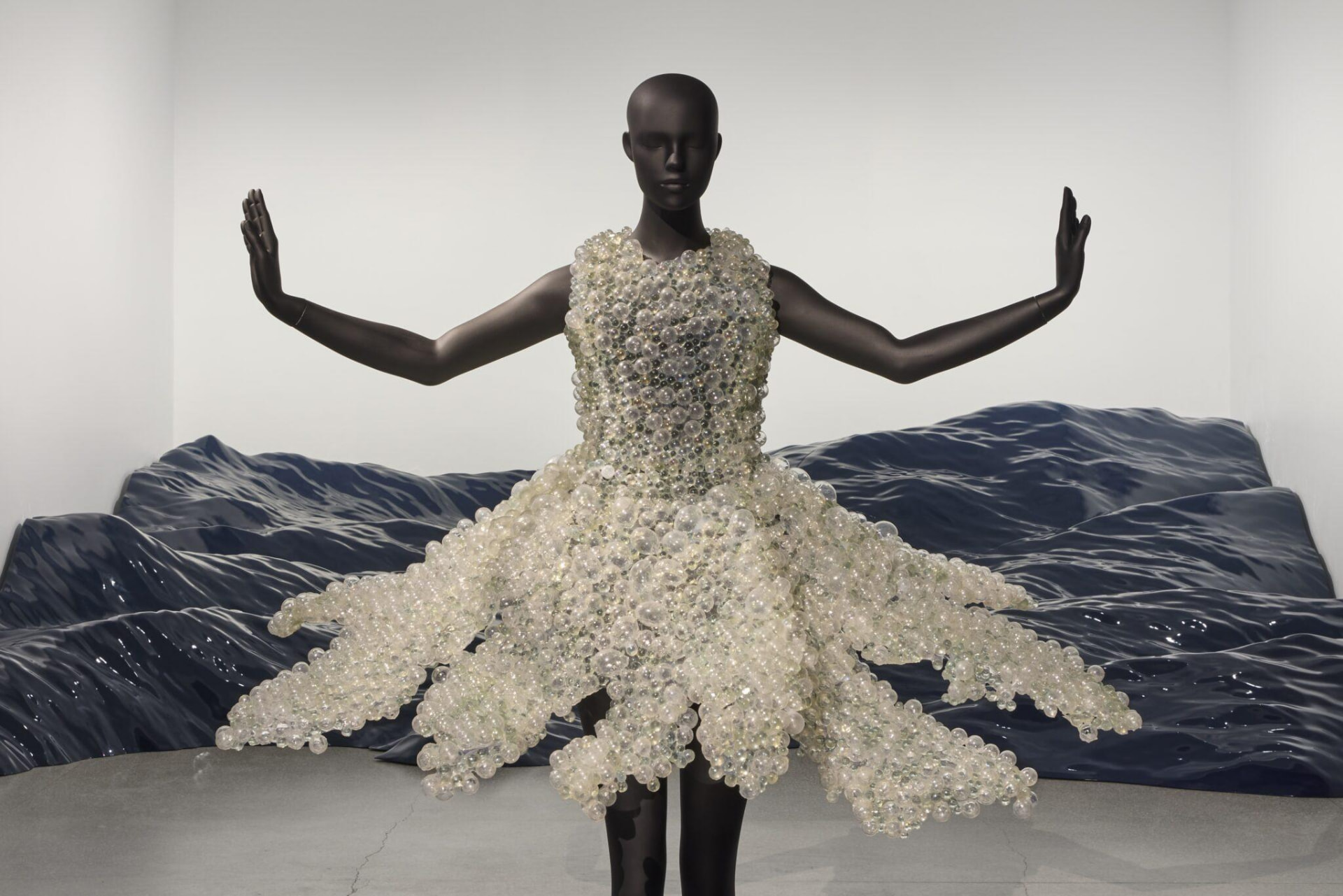
Image: Glass-sphere couture look — Cultured Mag
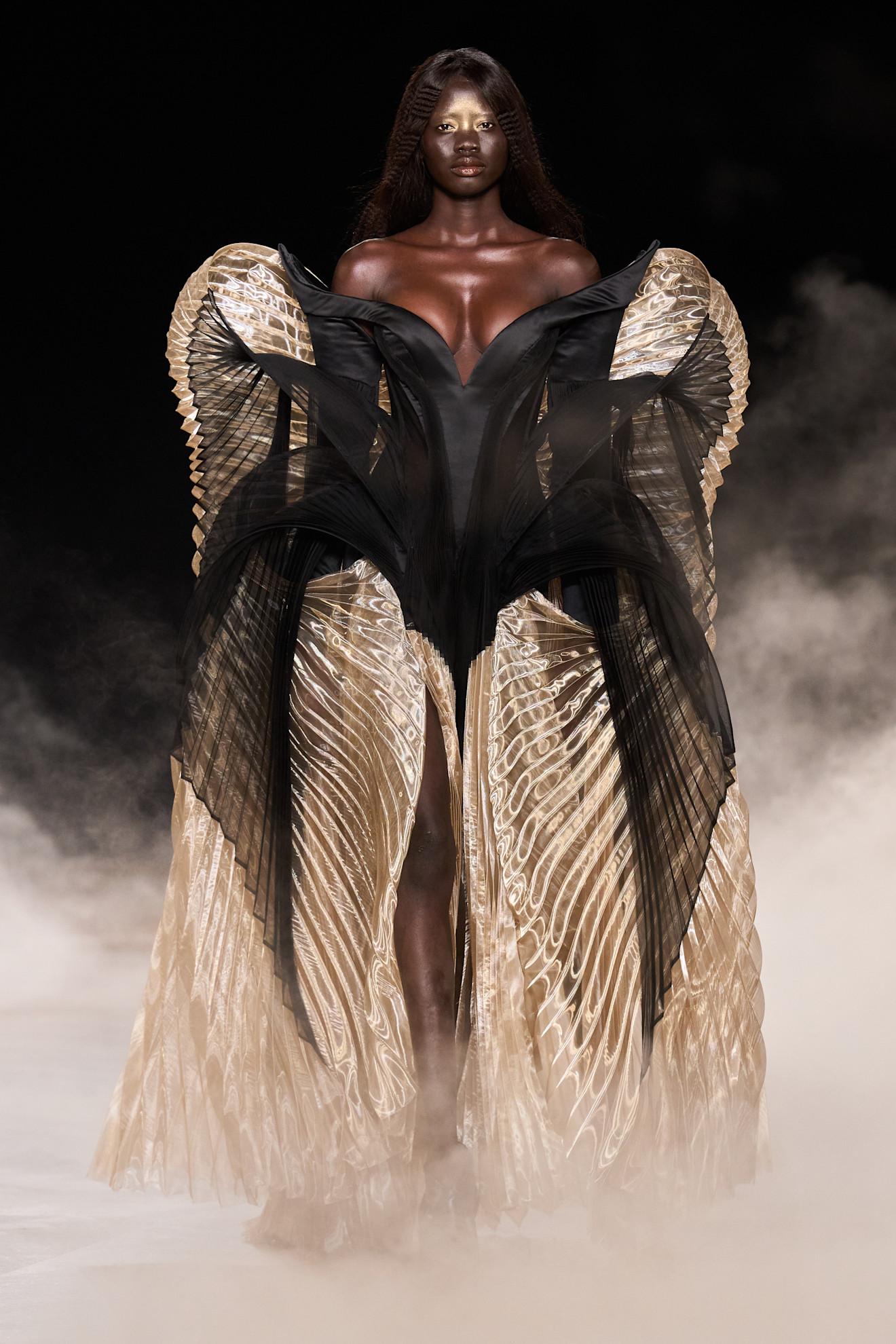
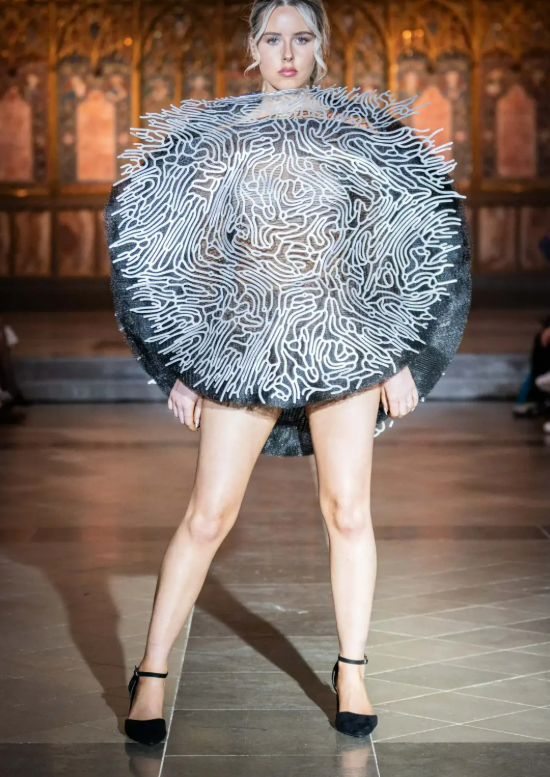
Image: Sculptural runway gown — HIA Mag
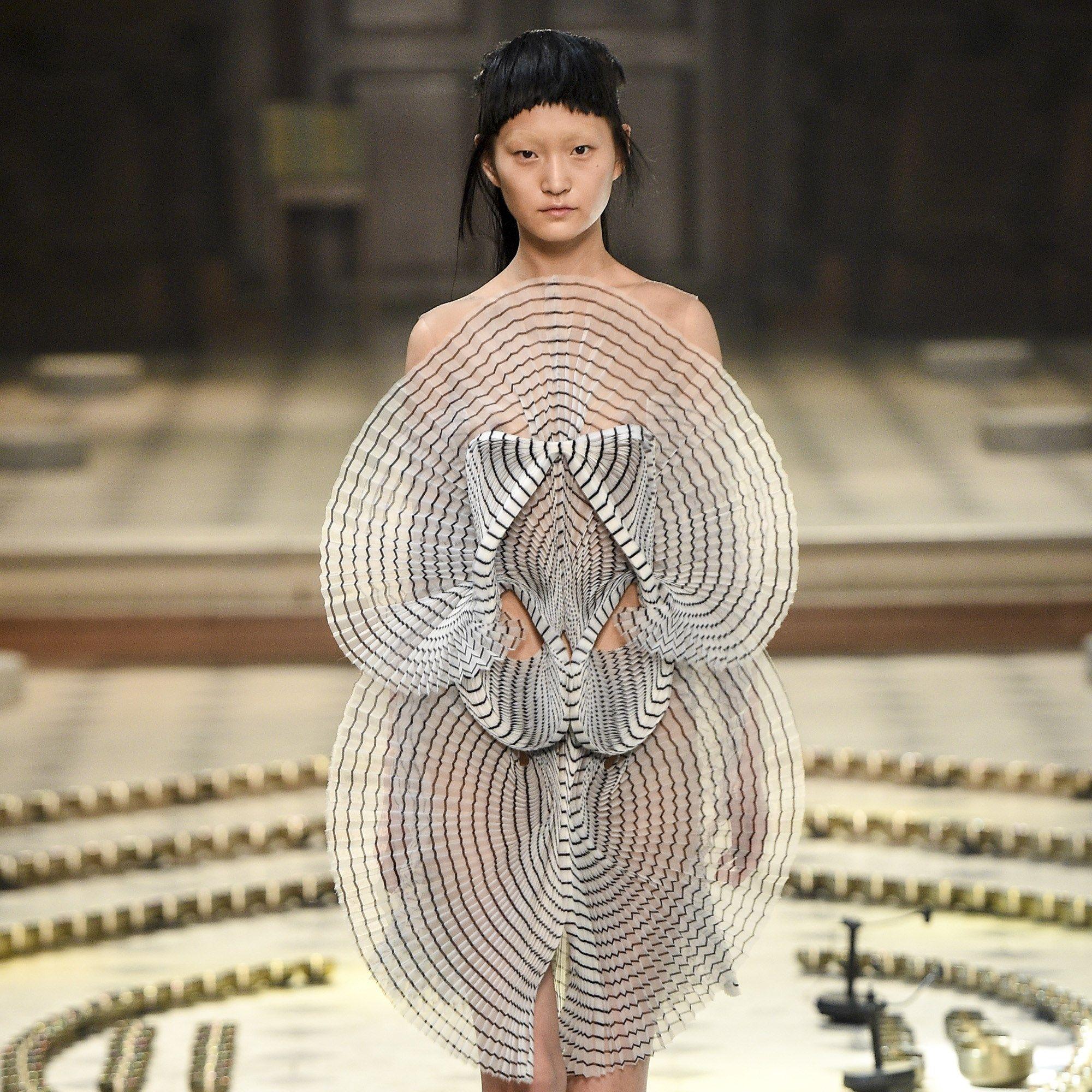
Image: Architectural runway silhouette — Vogue
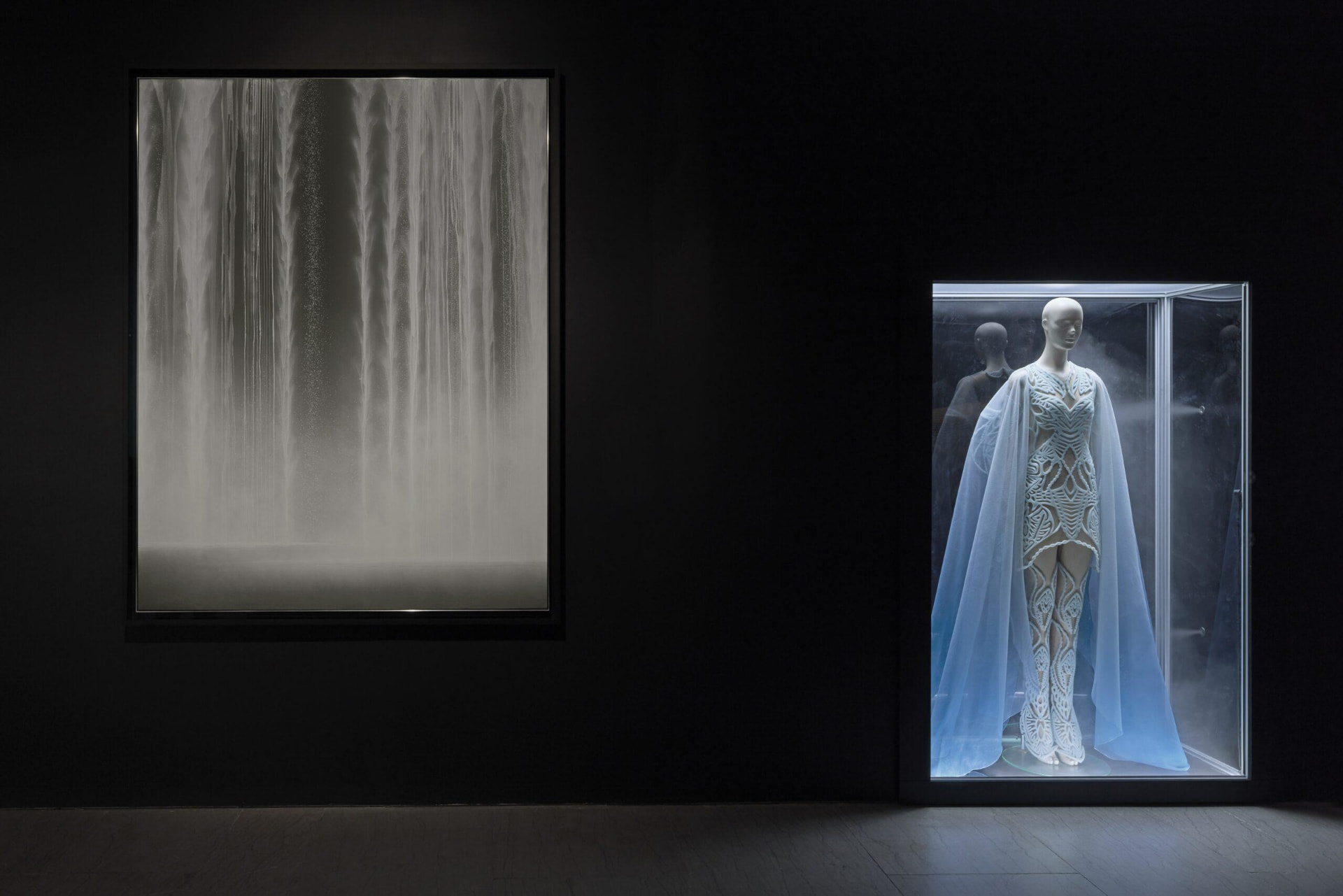
Image: Couture displayed in an exhibition setting — Cultured Mag
Iris van Herpen: When Couture Becomes a Living System
WAAR Editorial · 3 min read
There are designers who make clothes. Iris van Herpen makes us reconsider what clothing can be.
Presented at Paris Haute Couture Week on 6 July 2026, Sonic Starquakes takes its cues from oscillating stars, the branching forms of supernovae, galaxies and plasma. Across the collection, those forces become translucent surfaces and intricate volumes that extend outward from the body. The result is not a costume of the future, but an inquiry into how matter and energy might shape what we wear.
FROM THE BODY TO THE COSMOS
Van Herpen has long looked beyond fashion for her forms: to marine life, biological structures, dance and the geometry of nature. Here the scale shifts from the organism to the universe. The architecture of each look is both structural and fleeting, changing as its wearer moves through light and space.
The Helix Nebula dress brings a physical phenomenon into the garment itself. Made with plasma specialist Mundy Hepburn and glass artist Marc Barreda, it contains hand-blown glass forms with luminous plasma. The maison's collection notes describe 10,000 additional hand-blown glass spheres bonded to illusion tulle; Vogue's runway report cites 30,000 spheres. Touch draws the plasma's light toward the body, making the wearer part of an electromagnetic encounter rather than a passive occupant of the dress.
ELECTRICITY AS A COLLABORATOR
For the Fractal Universe gown, van Herpen worked with Lichtenberg specialist Dale Sulak. Clear synthetic polymer was cast in a 3D-printed mould, charged in a particle accelerator and cryogenically preserved. Electrical discharge creates branching, lightning-like pathways within the material. These are not motifs printed onto fabric; they are traces left by the process itself.
That distinction changes the role of the designer. Form is carefully prepared, but its final expression also belongs to a physical force. The work brings to mind responsive architecture: structures that are designed not only to occupy space, but to react to changing conditions.
A PRACTICE BEYOND THE RUNWAY
The experiment has a history. In 2025, Sympoiesis included a look inhabited by 125 million bioluminescent algae, developed with biodesigner Chris Bellamy. Where that garment brought living organisms into couture, Sonic Starquakes brings charged matter into view. Both shift fashion away from a fixed object and toward an active relationship with its environment.
Van Herpen has also made aerial sculptures that leave the body behind altogether. At the Brooklyn Museum, Iris van Herpen: Sculpting the Senses places more than 140 of her couture creations alongside art, design, scientific objects and natural-history specimens. The museum lists the exhibition through 6 December 2026; the designer's website lists 5 December. The exhibition makes the spatial ambition of her work visible beyond the runway.
WEARABLE ARCHITECTURE
For an architecture audience, the connection is more than metaphor. Van Herpen works with volume, structure, transparency, surface, light and movement; a gown can occupy the air around its wearer like a small, temporary building. Yet the technical ambition never eliminates the hand: glass is blown, surfaces assembled, and delicate elements finished through exacting craft.
That union may be her most convincing proposition for contemporary luxury. Technology need not replace craftsmanship; it can give craftspeople an unfamiliar material vocabulary. Between a living organism, an electrical discharge and a body in motion, van Herpen treats couture not as a finished shell, but as a system to be experienced.
AT A GLANCE
Designer: Iris van Herpen · Maison founded: 2007 · Collection: Sonic Starquakes, Autumn/Winter 2026–27 · Presented: Paris, 6 July 2026 · Exhibition: Iris van Herpen: Sculpting the Senses, Brooklyn Museum (museum-listed closing date: 6 December 2026).
Reporting sources: Iris van Herpen's Sonic Starquakes, Helix Nebula, Fractal Universe and Sympoiesis collection notes; Brooklyn Museum exhibition information.