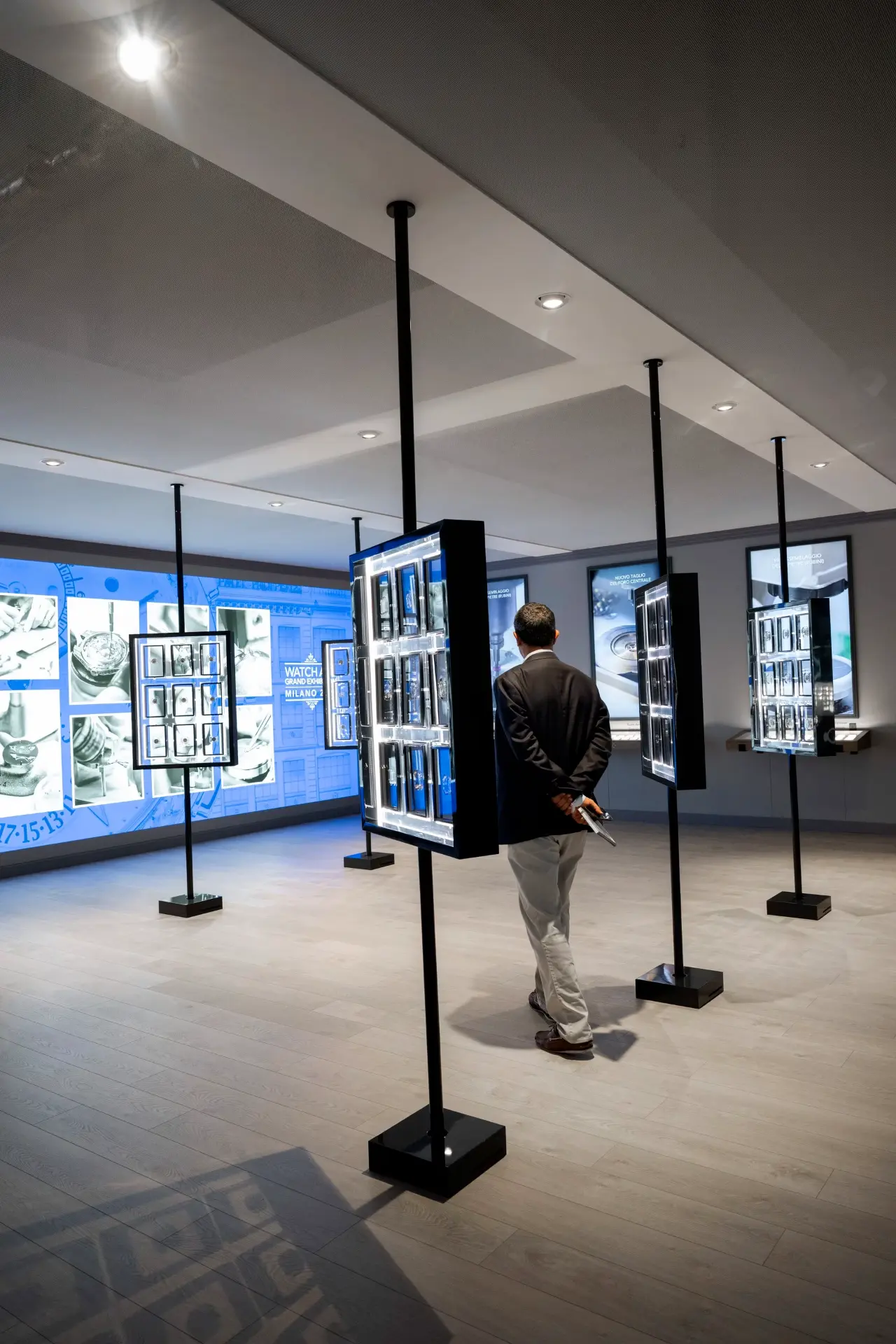
Illuminated displays bring the watch and its inner workings into the same field of view, turning technical knowledge into a spatial experience. Image supplied to WAAR.
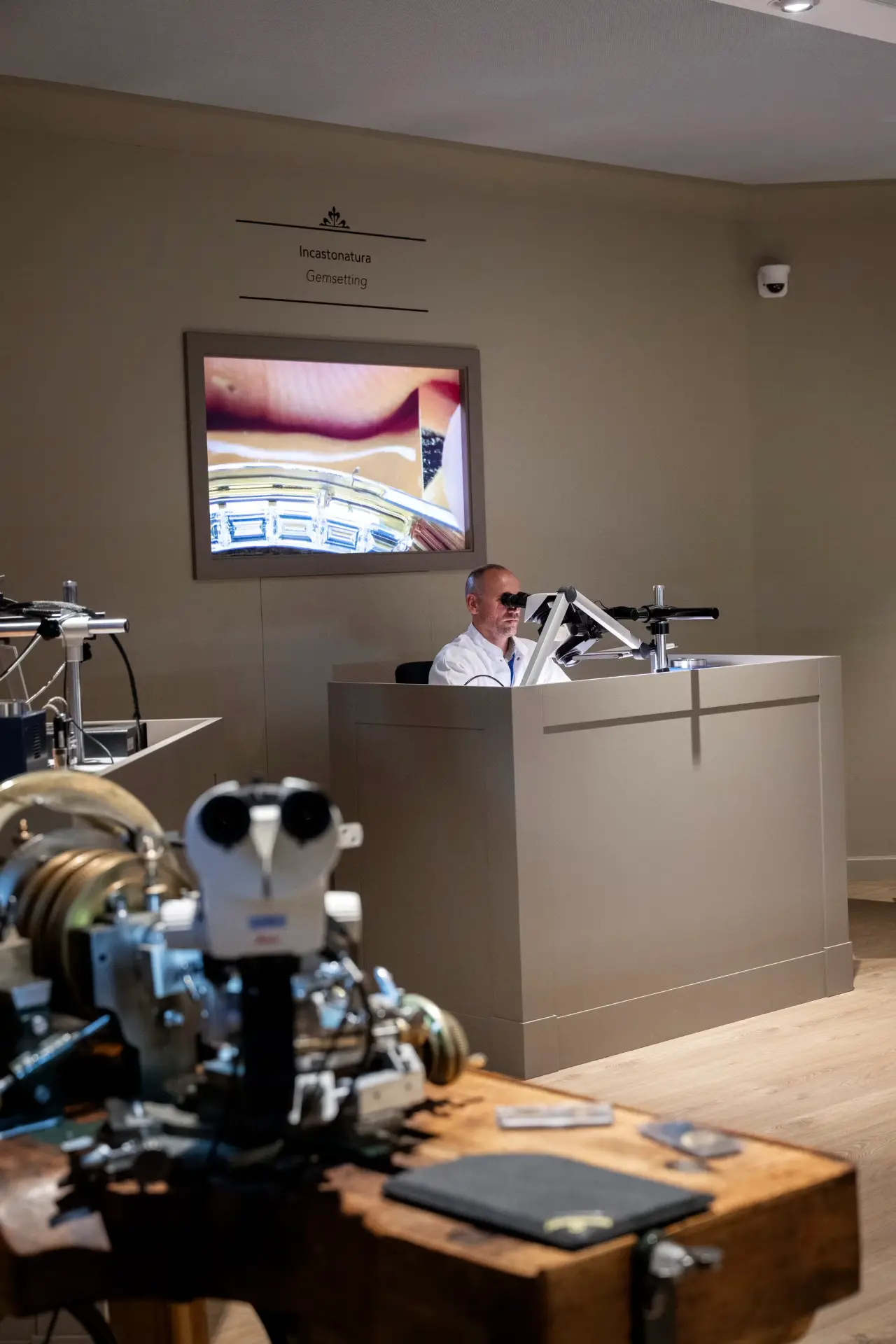
A gemsetting demonstration reveals the patient, highly controlled handwork behind the finished timepiece. Image supplied to WAAR.
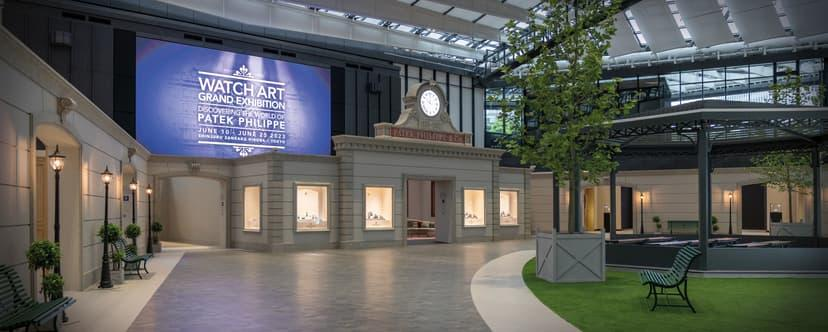
Archive view of WATCH ART Tokyo 2023: a recreated Genevan streetscape illustrates the exhibition programme’s longstanding use of architecture to tell its story. This is not the Milan venue. Image supplied to WAAR.
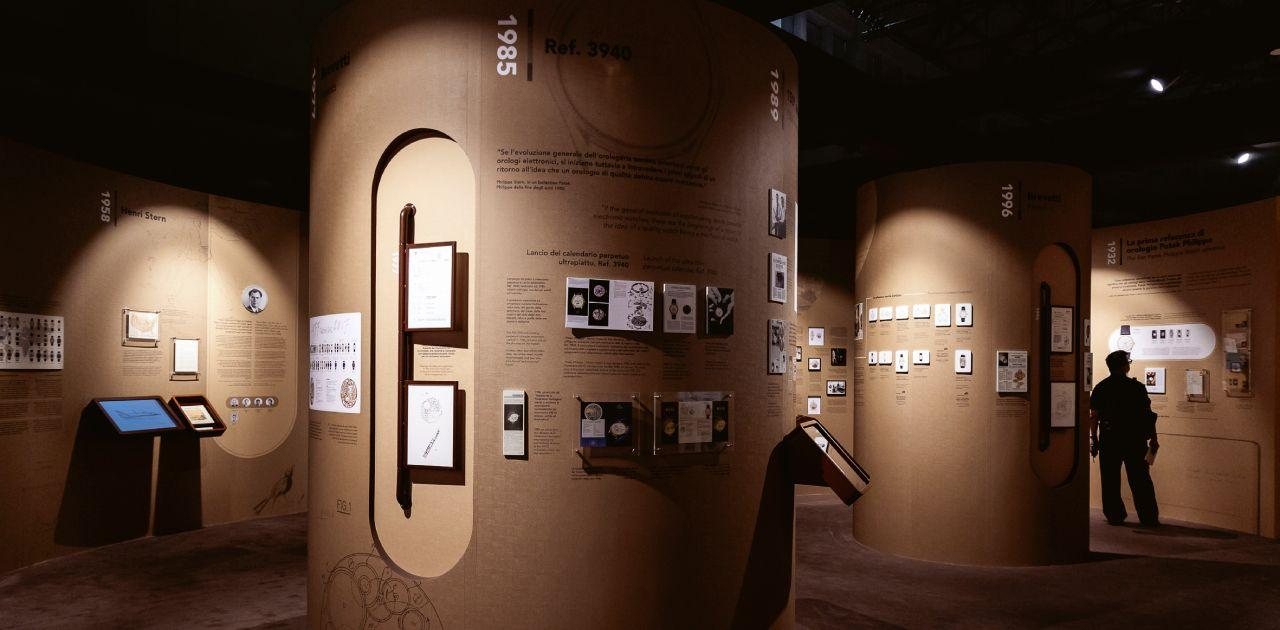
Historical displays place individual watches within a wider chronology of invention, design and the manufacture’s evolving identity. Image supplied to WAAR.
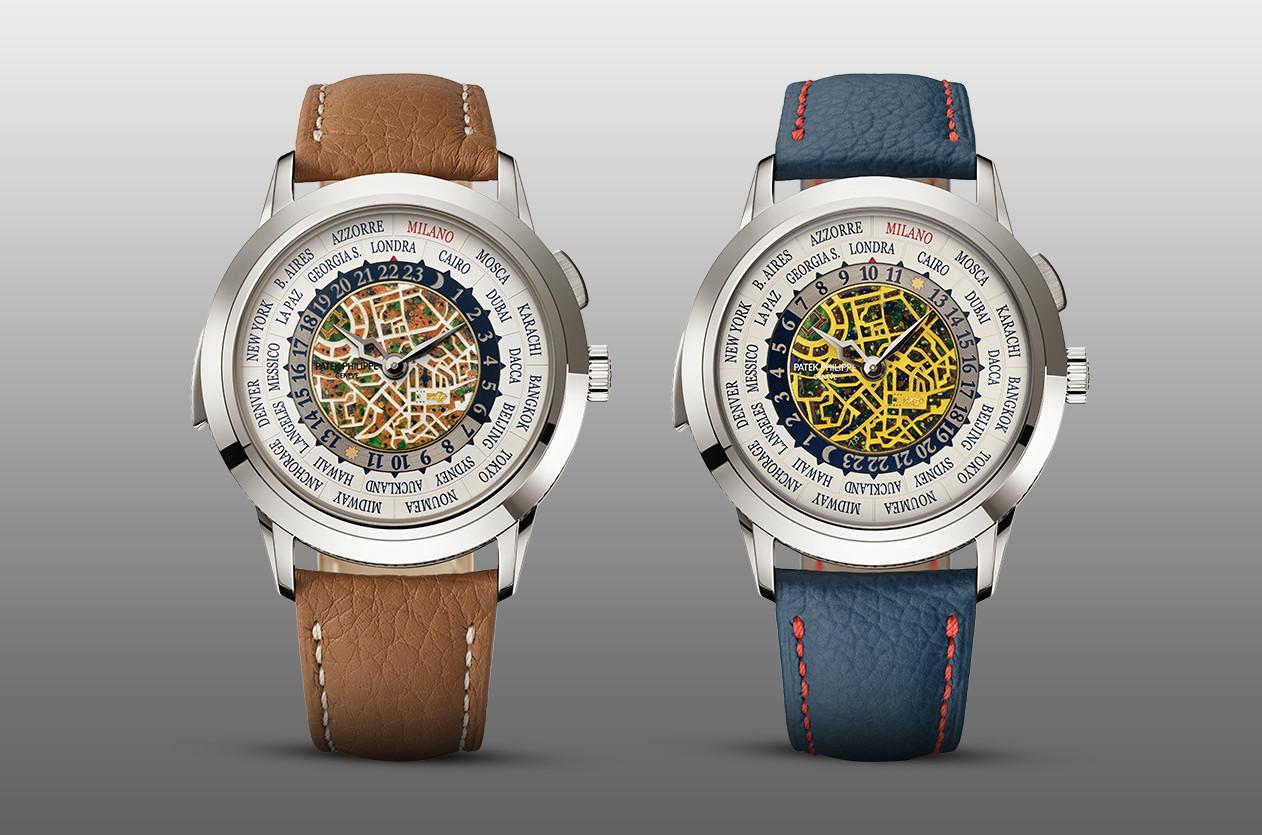
Milan-inspired World Time dials translate the city’s streets into miniature compositions, connecting mechanical precision with urban memory. Image supplied to WAAR.
Patek Philippe’s WATCH ART Grand Exhibition: Where Horology Becomes Art
WAAR Editorial · 4 min read
A fine watch measures time. An exceptional one also carries it: in the knowledge of its makers, the traditions of its decoration and the history of those who have worn it. In Milan, Patek Philippe brought these dimensions together, treating horology not as an isolated luxury category but as a meeting point between engineering, architecture and art.
The manufacture’s seventh WATCH ART Grand Exhibition concluded on 18 October 2026, following a run that began on 2 October at CityOval, the former Palazzo delle Scintille in Milan’s CityLife district. Across approximately 2,900 square metres and 15 themed spaces, more than 500 timepieces and objects offered a broad view of its heritage, contemporary production and rare handcrafts. It was Patek Philippe’s largest WATCH ART exhibition to date.
ARCHITECTURE AS AN INTERPRETER
Beneath CityOval’s monumental dome, the exhibition translated aspects of the manufacture’s Genevan identity into a temporary landscape. Museum displays, architectural references and spaces devoted to making established a journey from the finished object back to the people, processes and places responsible for it.
The setting mattered because watches are easily reduced to images of precious materials and immaculate surfaces. Here, space, light and movement supplied another reading. Visitors were invited to understand not simply what a timepiece looks like, but why it takes the form it does. Exhibition design became an interpretive discipline: a way of making knowledge visible.
THE PRECISION BEHIND THE BEAUTY
Contemporary collections appeared alongside complex movements and demonstrations by specialist watchmakers. The Grandmaster Chime, with its 20 complications, and the Sky Moon Tourbillon illustrated the extraordinary task of coordinating multiple mechanical functions within the limited volume of a wristwatch.
For an architectural audience, the parallel is compelling. A movement is a tightly resolved spatial system: components occupy exact positions, energy passes through controlled sequences and each intervention affects the whole. Its beauty is inseparable from its organisation.
The Manufacture Room explored component production, movement construction and research and development. These displays shifted attention from the prestige of ownership to the accumulated expertise behind the object. Precision emerged not as a visual style, but as a practice sustained through patience, testing and exacting judgement.
WHEN CRAFT BECOMES FINE ART
The exhibition’s rare handcrafts offered a different expression of mastery. Enamelling, miniature painting, hand engraving, micro-marquetry and guilloché brought colour, texture and narrative to surfaces measured in millimetres. Italian-inspired works and live demonstrations made these specialist traditions accessible beyond the watchmaker’s bench.
Such techniques are more than embellishment. They preserve forms of knowledge that cannot be separated from the human hand: the pressure of a tool, the control of a line, the understanding of how a material responds. In a culture increasingly shaped by automation, their continued practice gives continuity a tangible form.
HISTORY ON A HUMAN SCALE
Objects from the Patek Philippe Museum in Geneva placed contemporary watchmaking within a longer cultural timeline, with historic watches from the sixteenth to the nineteenth centuries tracing the evolution of portable timekeeping. Among the notable exhibits were a pendant watch presented to Queen Victoria in 1851 and a 1901 pocket watch bearing a portrait of Pope Leo XIII.
Beyond their technical significance, these objects revealed how watches have acted as gifts, personal emblems and records of social life. Mechanics and decoration did not develop independently; they evolved alongside changing ideas of status, identity and individual expression.
MILAN, IN MINIATURE
Seven limited-edition timepieces created in tribute to Italy brought the historical narrative into the present. References to Italian culture and place were absorbed into the manufacture’s established design language rather than applied as a separate layer of branding.
The Milan-inspired World Time dials pictured here make that relationship especially clear. Streets become lines of colour; the city becomes a miniature landscape carried on the wrist. Architecture is no longer simply the setting for the exhibition. It enters the object itself.
LUXURY BEYOND EXCLUSIVITY
Milan provided a fitting context. Its architecture, fashion, furniture and industrial design have long negotiated the relationship between technical intelligence and aesthetic expression. By offering free public admission, WATCH ART opened a specialised world to a wider audience and communicated value through understanding rather than distance.
For the wider design industry, the lesson is not about spectacle alone. A compelling experience connects product, process, place and cultural identity. The exhibition made those relationships legible, allowing the finished watch to be understood as the result of a much larger creative tradition.
THE ENDURING VALUE OF TIME
With its Milan chapter now closed, WATCH ART leaves an argument for luxury grounded in mastery and continuity. Precious materials and rarity may contribute to value, but they do not explain it fully. The deeper measure is the capacity of an object to hold knowledge, care and meaning across generations.
In Milan, time was not simply displayed. It was interpreted — through architecture, engineering, artistry and the accumulated experience of a historic Swiss manufacture.