Image: Patterned sculptural runway look — PAACADEMY
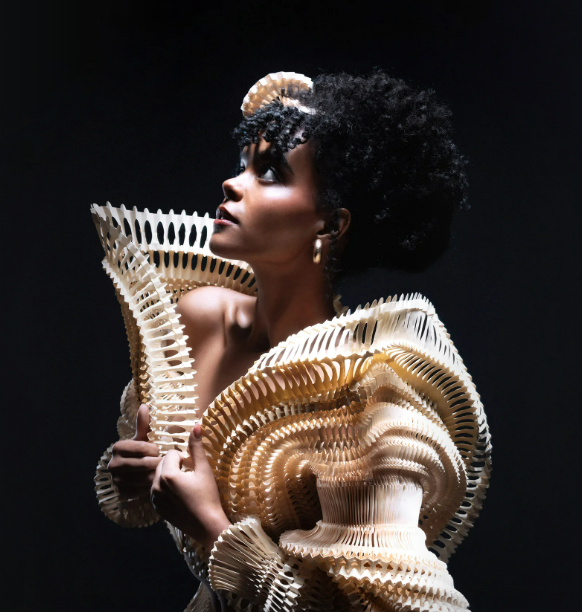
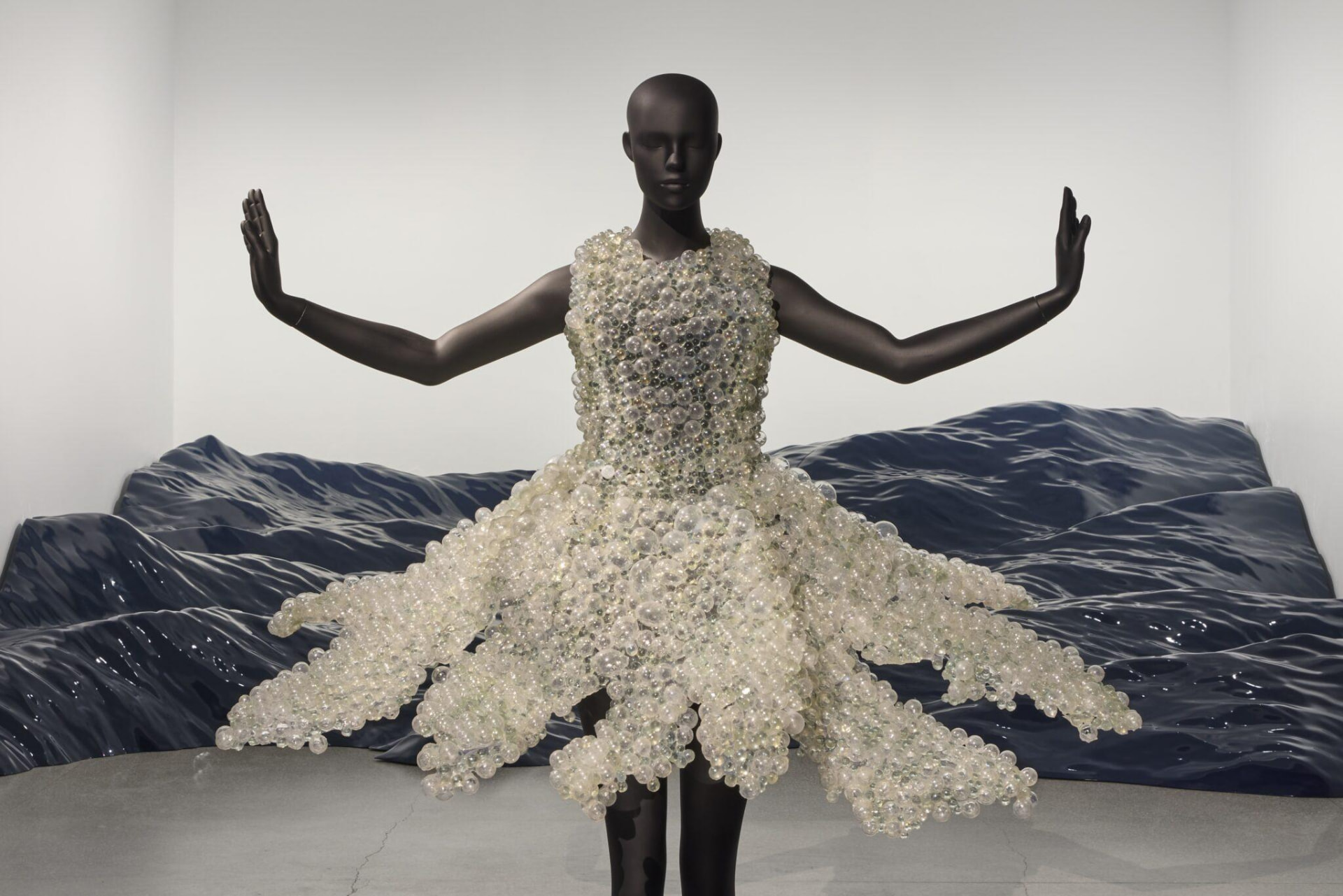
Image: Sculptural wearable form — PAACADEMY
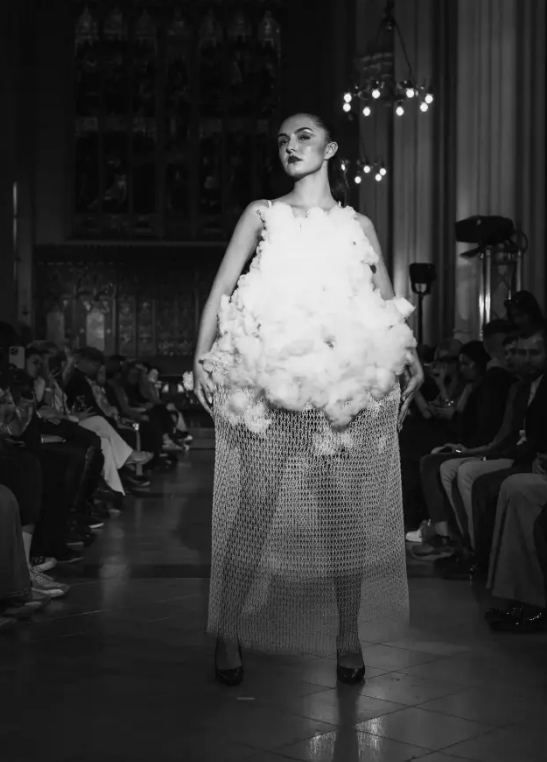
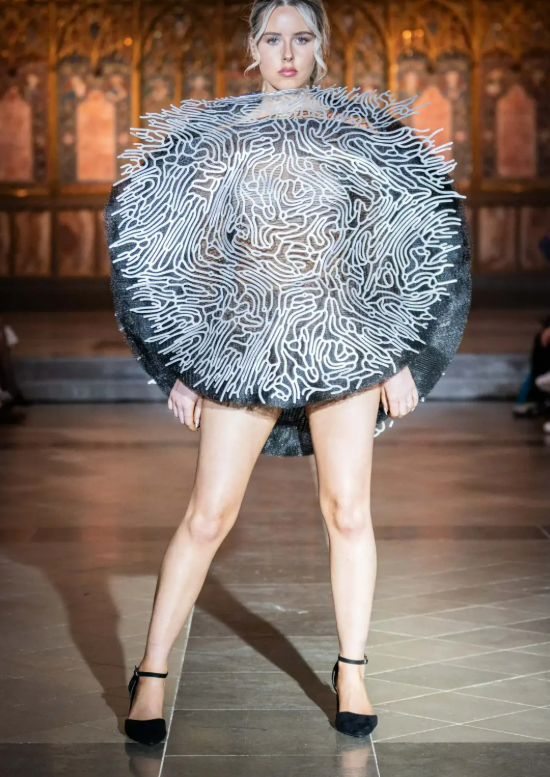
Image: Black-and-white runway look — PAACADEMY
Showcasing Architectural Fashion: Gareth Volka
WAAR Editorial · 3 min read
Fashion has long borrowed the language of architecture. In Gareth Volka's work, the connection runs deeper: a garment is conceived through structure, volume and the space it makes around a moving body.
The London-based architect and fashion designer works across computation, digital fabrication and hand assembly. His sculptural pieces are not simply clothing decorated with architectural motifs. They are propositions about how a surface can hold its shape, how a material can move, and what happens when the body occupies a designed structure.
WHEN THE GARMENT BECOMES STRUCTURE
Volka's practice begins as much with geometry and fabrication as with fabric. His work has explored reaction-diffusion patterns, fractal geometries, 3D printing and customised machine instructions, or G-code. A repeating form can become a modular assembly; a digitally generated pattern can be translated into a wearable metal surface. These are design tools, not just a way to give a dress a futuristic appearance.
Consider a silhouette as an architect might: it establishes volume. Its edges define a boundary; its material determines what bends and what resists. A rigid extension around the shoulders changes the wearer's apparent scale. An open lattice filters light and lets the body remain visible through the structure. The wearer is not a static display for the object but an active part of its spatial effect.
BLACK SWAN / WHITE SWAN
Volka presented Black Swan / White Swan, his SS27 collection, at a public London Fashion Week exhibition on 19 September 2026. The event listing described 3D-printed couture, origami latex and robotic fashion: a vocabulary that brings engineered construction into dialogue with softer, more pliable materials.
The collection's title sets up a series of contrasts: black and white, structure and fluidity, shadow and light. Architecture negotiates similar tensions, using a stable frame to hold open space or a heavy surface to create an impression of lightness. Volka carries that negotiation onto the body, where form must also accommodate movement.
FROM CODE TO MATERIAL
In computational design, the instructions that guide production can shape the work itself. A custom printing path is not merely the final step after an idea is finished; its sequence, scale and repetition affect the resulting form. Volka has used this approach to investigate pieces that conventional pattern-cutting alone could not easily produce.
Reaction-diffusion systems offer another route. The mathematical model can generate branching or rippling patterns reminiscent of natural growth. Translated into metal or printed structures, a pattern becomes a physical surface with weight, thickness and points of connection. The transition from algorithm to material is where a digital image has to contend with gravity, fit and the human body.
That tension keeps the work grounded in craft. Volka's practice also encompasses sewing, metalwork, latex and assembly by hand. Digital tools can propose an unfamiliar geometry, but the final garment still depends on choices about finish, balance and how it feels in motion. Rather than replacing making, computation broadens what makers can attempt.
ARCHITECTURE BEYOND THE RUNWAY
In 2026, Volka and Studio OleO designed Jelly Haven for Pride in London. Selected by Architecture LGBT+, the installation assembled participant-made, jellyfish-inspired elements into a moving, iridescent canopy. It shifted the question of wearable space from the individual model to a collective public experience: an architecture made by the people beneath it.
The project reveals a continuity in scale, from a garment that surrounds one body to a temporary structure that gathers many. In both, the designed object changes as people move through the world with it.
A NEW ARCHITECTURE OF THE BODY
The most persuasive architectural fashion does not make clothing look like a building. It asks what structural thinking can contribute to the experience of being dressed: how a form shapes movement, how an edge frames the body, and how materials mediate light and space.
Volka's work offers one answer. Computation can generate the form; fabrication can give it structure; craft can make it wearable. The resulting couture is not architecture in miniature, but architecture in motion.
REPORTING SOURCES
Gareth Volka Fashion's Black Swan / White Swan exhibition listing (19 September 2026); PAACADEMY's Architectural Fashion: AI & 3D Printing workshop and Gareth Volka profile; Architecture LGBT+'s 2026 Jelly Haven announcement and post-parade report. Images courtesy of PAACADEMY.