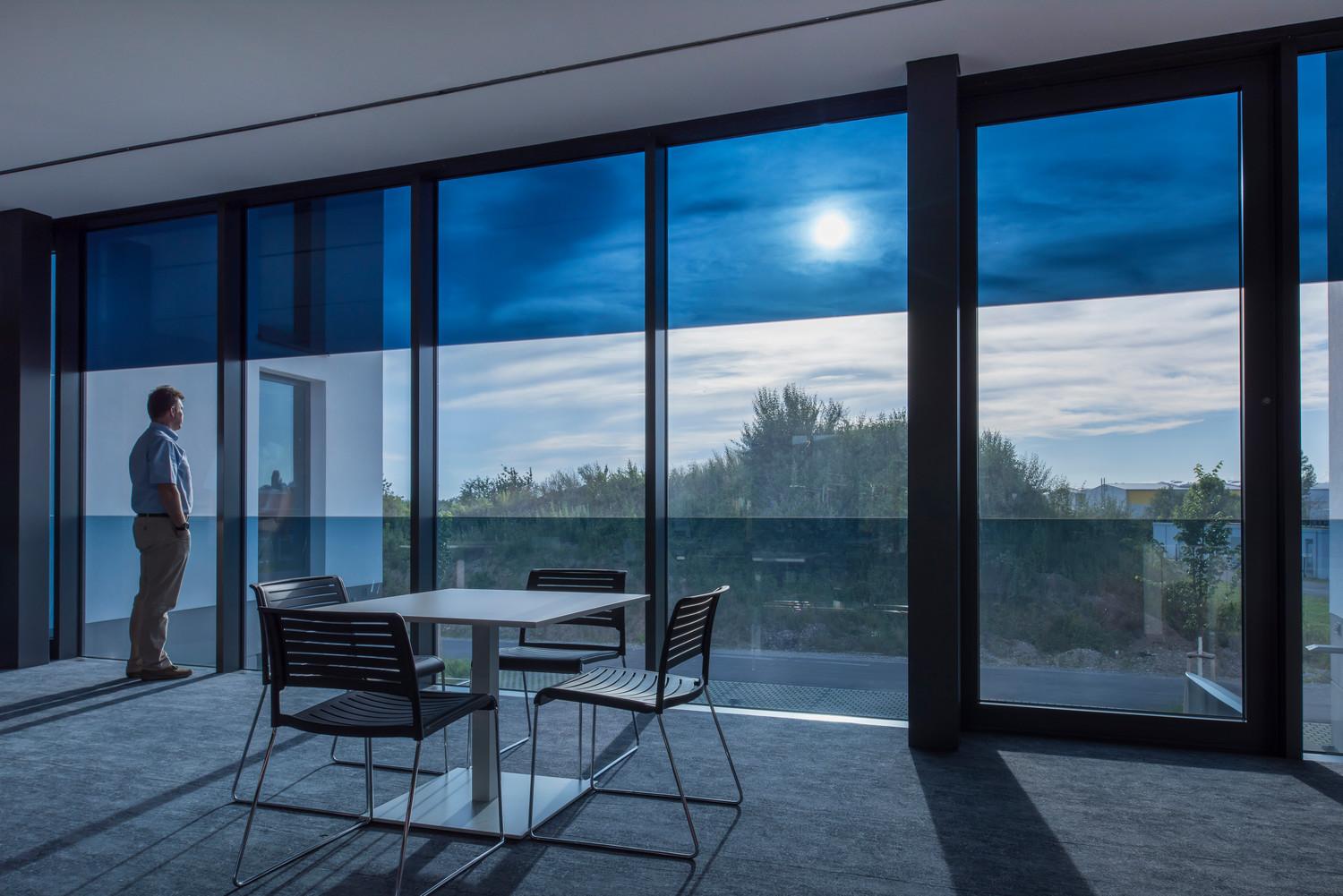
Image: Electrochromic glazing shifts tint to moderate daylight and solar gain — supplied to WAAR
Smart Glass Becomes an Active Part of the Building
WAAR Editorial · 2 min read
Once simply a transparent boundary, the façade is becoming a responsive building system.
The next generation of architecture is not defined only by dramatic forms and lower-impact materials. Increasingly, it is shaped by products that allow buildings to react to changing environmental conditions. Electrochromic smart glass is one of the clearest examples: dynamic glazing that changes tint to control sunlight, glare and heat entering a building.
A FAÇADE THAT RESPONDS
Traditional glass is passive. Once installed, it remains essentially the same whether the sun is intense or the sky is overcast. Electrochromic glazing changes that relationship by transitioning between clearer and darker states through a small electrical stimulus.
The result is an envelope capable of adapting to solar conditions while helping manage interior comfort. This is particularly relevant to towers, hotels and commercial buildings with extensive curtain walls, where uncontrolled solar gain can add significantly to cooling demand.
FROM WINDOW TO BUILDING INTELLIGENCE
The most important development is that smart glazing is becoming part of a wider movement toward the active façade. Sensors, controls and building-management systems can coordinate the envelope with changing daylight and environmental conditions rather than asking static glass and internal blinds to manage every situation.
For architects, this creates another design dimension. Performance becomes dynamic rather than fixed, and transparency no longer has to mean accepting the same level of glare and heat throughout the day.
WHY IT MATTERS FOR NEW BUILDINGS
Glass remains one of contemporary architecture’s defining materials, but the larger the glazed surface, the greater the challenge of controlling heat and glare. Smart glazing offers a way to retain daylight, views and connection to the exterior while giving a building greater control over its internal environment.
The technology belongs to a broader field of high-performance glazing, including vacuum-insulated units and advanced façade systems for both new construction and renovation. Its value will depend on how well it is integrated with orientation, shading, controls and the building’s wider energy strategy.
THE FUTURE IS RESPONSIVE
Smart glass is not a universal solution. Performance varies with climate, orientation, control strategy and product specification, while switching speed, durability, scale and whole-life environmental impact remain important considerations.
The direction, however, is clear. The façade of tomorrow may no longer be something that simply looks good. It may sense, adapt and perform — turning the building envelope into an active part of architectural intelligence.
PRODUCT FILE
Product: Electrochromic Smart Glass · Category: Building Envelope / Façade Technology · Applications: high-rise offices, hospitality, residential towers, airports and institutional buildings · Primary benefits: dynamic solar control, glare management, daylight optimisation and potential cooling-energy reduction.