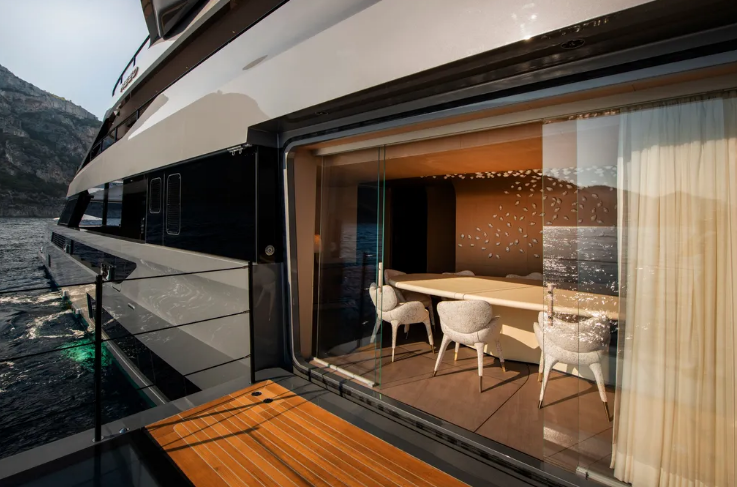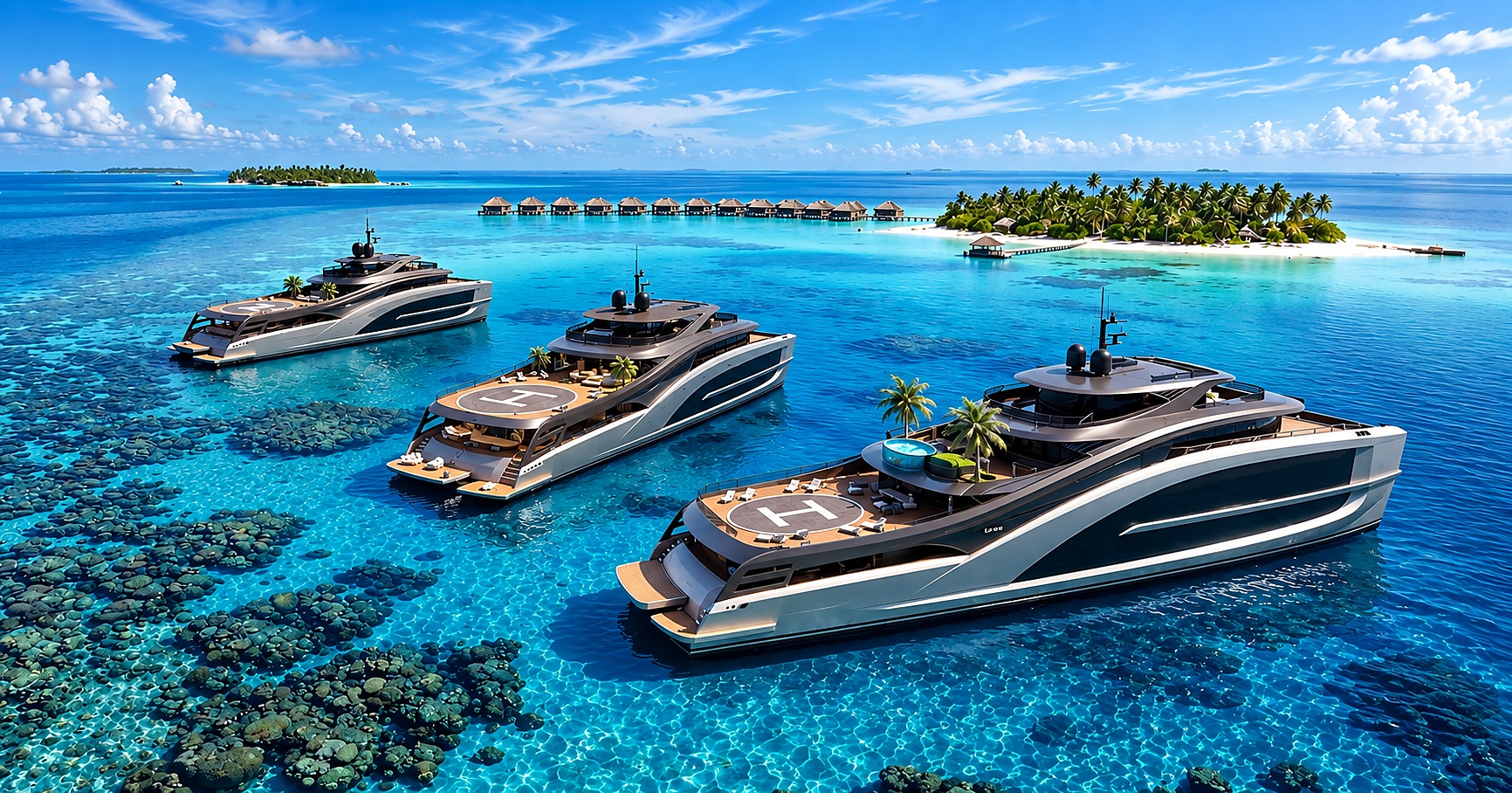
The Q-Line imagined as a family of vessels: a shared sculptural language gives the catamaran platform a distinctive identity. Supplied concept rendering; not a photograph of completed yachts.
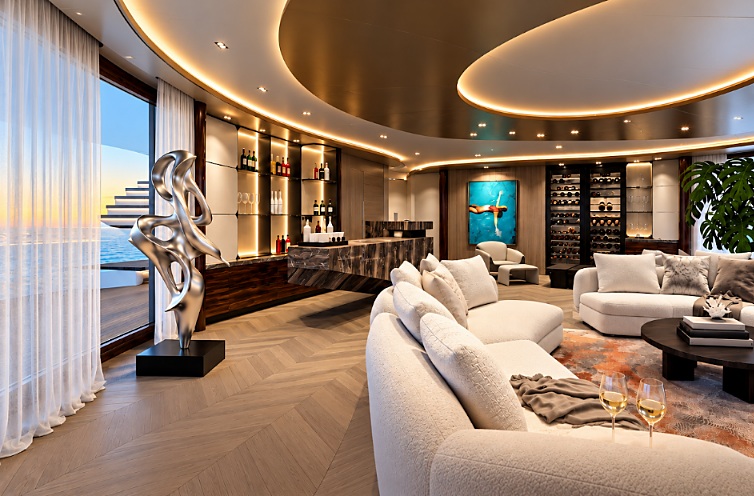
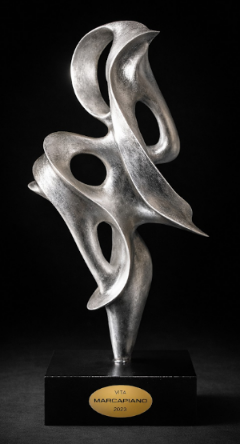
In the proposed Q140 saloon, MARCAPIANO’s Vita introduces an ascending sculptural counterpoint to the interior’s flowing lines. Supplied interior rendering.
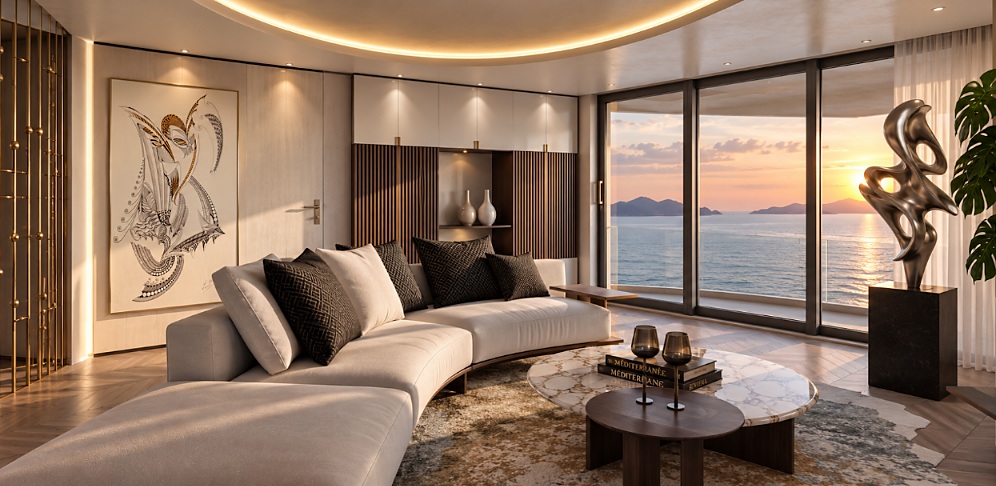
Glazing, artwork and the horizon are composed as parts of one interior experience, rather than independent layers of decoration. Supplied interior rendering.
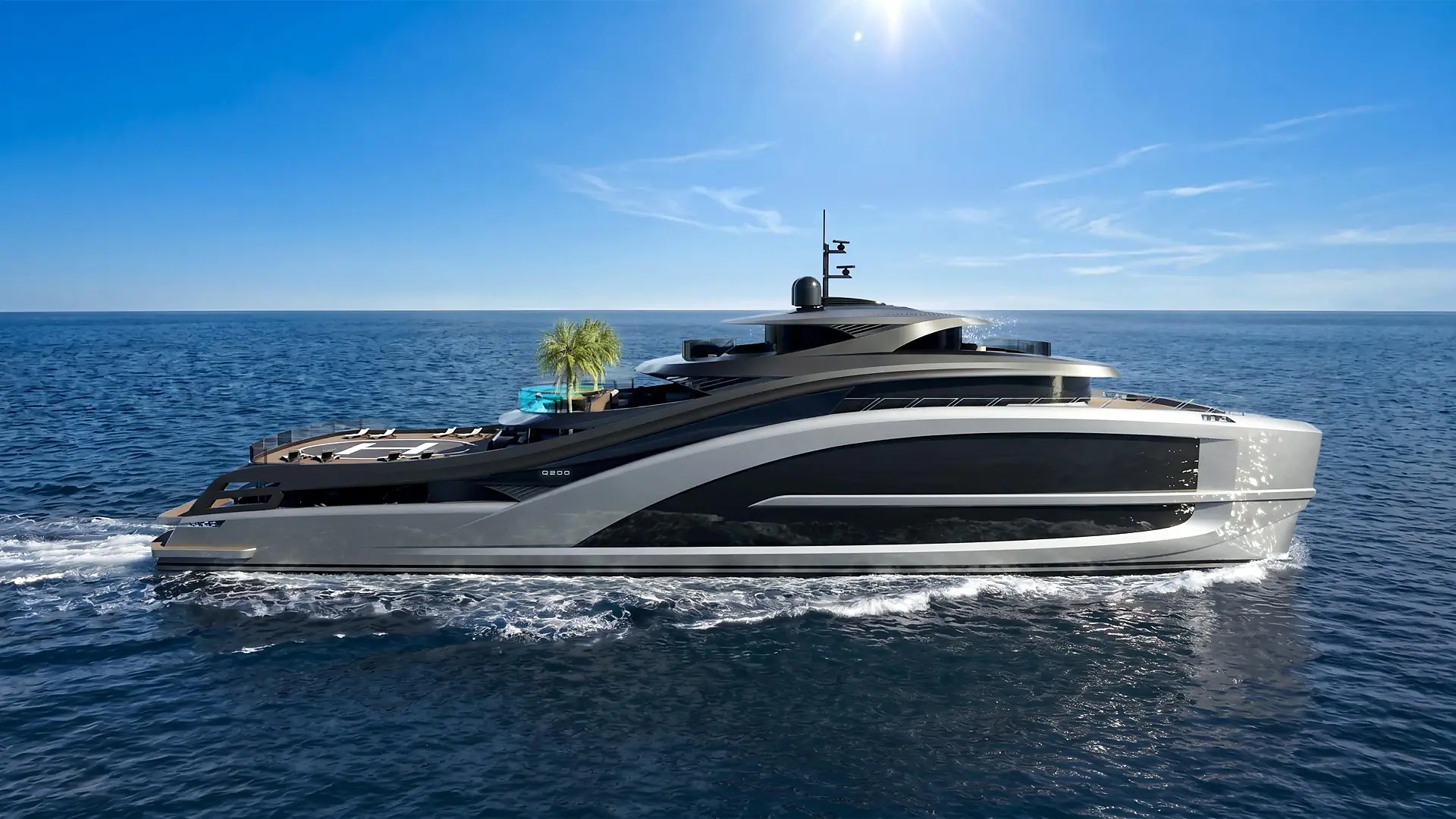
A Q-Line profile study demonstrates Luxardo’s continuous exterior lines; the supplied image depicts the Q200, not the Q140. Supplied concept rendering.
Ultimate Catamarans: Antonio Luxardo’s Yacht Design Meets the Artistic Vision of MARCAPIANO
WAAR Editorial · 6 min read
At the intersection of yacht design and contemporary art, Ultimate Catamarans brings together Antonio Luxardo and Italian artist MARCAPIANO in a collaboration that asks how a vessel might become more than a means of travel: an environment with its own architectural character and artistic identity.
Speed, comfort and technical performance remain fundamental to yachting. Yet they do not fully explain the appeal of a private vessel. Proportion, craftsmanship, original art and the relationship between rooms and the sea can give an owner something less easily measured—a distinctive sense of place.
The Q140 offers a design proposition within that conversation. It connects the twin-hull platform’s spatial possibilities with Luxardo’s exterior and interior architecture, and artwork selected to engage with the spaces he has imagined. The significance lies not simply in putting art aboard a yacht, but in considering its presence within the design process.
Q140: A FLOATING RESIDENCE, IN CONCEPT
Presented as a concept at the Monaco Yacht Show in September 2026, the Q140 is a proposed 42-metre aluminium power catamaran with a stated beam of 15.5 metres and four decks. Antonio Luxardo is credited with both exterior and interior design. These are published project specifications, not dimensions verified aboard a completed vessel; the imagery accompanying this feature shows design renderings.
The width is central to the proposition. Rather than seeking spatial generosity through length alone, the design exploits the breadth of the catamaran platform to accommodate substantial interior volumes and outdoor areas. The architectural challenge is to make that generosity feel composed, not merely expansive.
Flowing lines, sculpted surfaces and broad areas of glazing seek to reconcile a substantial beam with visual lightness. In the proposed interiors, curved ceiling treatments, measured transitions and long views towards the water establish a connection between the vessel’s internal architecture and its changing surroundings.
The renderings are useful as statements of intent. They show how daylight, reflective surfaces and the horizon might contribute to life aboard; they should not be mistaken for evidence of a finished interior or its performance at sea.
Ultimate Catamarans describes its interiors as individually developed proposals, with layouts, furnishings, materials, colours, fabrics and finishes shaped around an owner’s requirements. Personalisation is therefore part of the design brief, rather than a claim that every arrangement pictured is a fixed production specification.
ANTONIO LUXARDO: SCULPTING SPACE AT SEA
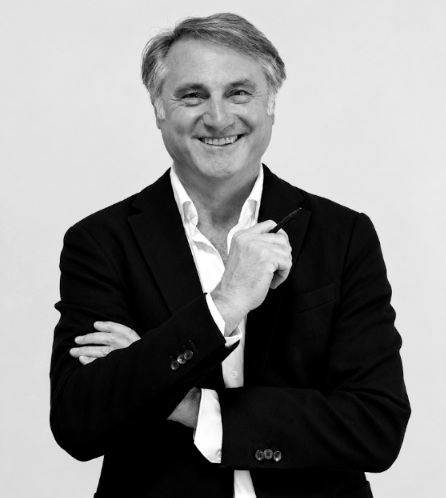
For Luxardo, the task is to translate the practical breadth of the twin-hull platform into an intentional architectural language. Continuous curves and carefully controlled proportions give the Q-Line a family resemblance without reducing every vessel to the same spatial solution.
The published range extends from the 32-metre Q110 to larger Q-Line proposals. The Q140 occupies a particularly interesting position within it: large enough for a substantial residential programme, yet conceived around width, connection and the quality of occupation rather than length alone.
A coherent design language does more than establish a recognisable silhouette. It provides a framework in which different layouts, materials and personal preferences can coexist without losing the character of the original concept. This balance between authorship and adaptability is familiar to architects working on private residences.
Circulation, natural light, proportion and the relationship between private and communal rooms influence the experience of a yacht just as they do a building. The difference is its setting. A vessel inhabits a changing landscape; its architecture must make sense in relation to movement, weather and an unfixed horizon.
MARCAPIANO: ART IN DIALOGUE WITH ARCHITECTURE
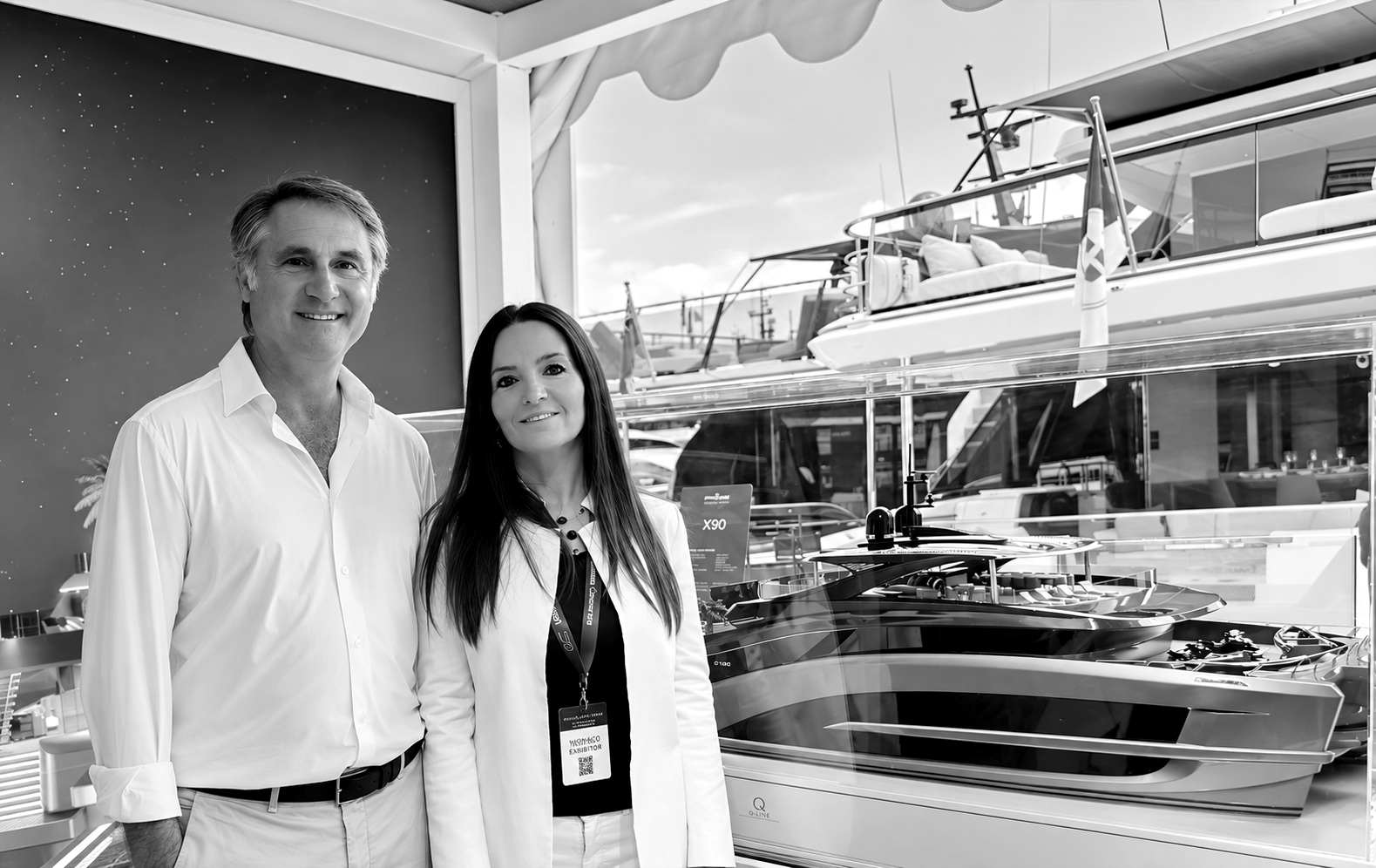
Where Luxardo establishes the spatial framework, MARCAPIANO introduces the presence of original art. The artist works across sculpture, painting and engraving, with a visual language described in project coverage as Animated Figurative Abstract. The supplied works reveal an interest in fluid form, rhythm and the movement between figuration and abstraction.
Erica Broilo, art director of MARCAPIANO, connects that artistic practice with the yacht collaboration. Her role belongs to the art side of the project: bringing the work into dialogue with architecture, light, the sea and the person who may ultimately inhabit the vessel. It is a different responsibility from yacht design, and a complementary one.
In the proposed main saloon, Vita becomes a focal point. Its fluid, ascending form is shown beside the glazing, where changing light and the viewer’s position would influence how it is perceived. The sculpture’s placement is part of the interior proposal—not a claim that it has already been installed aboard a completed Q140.
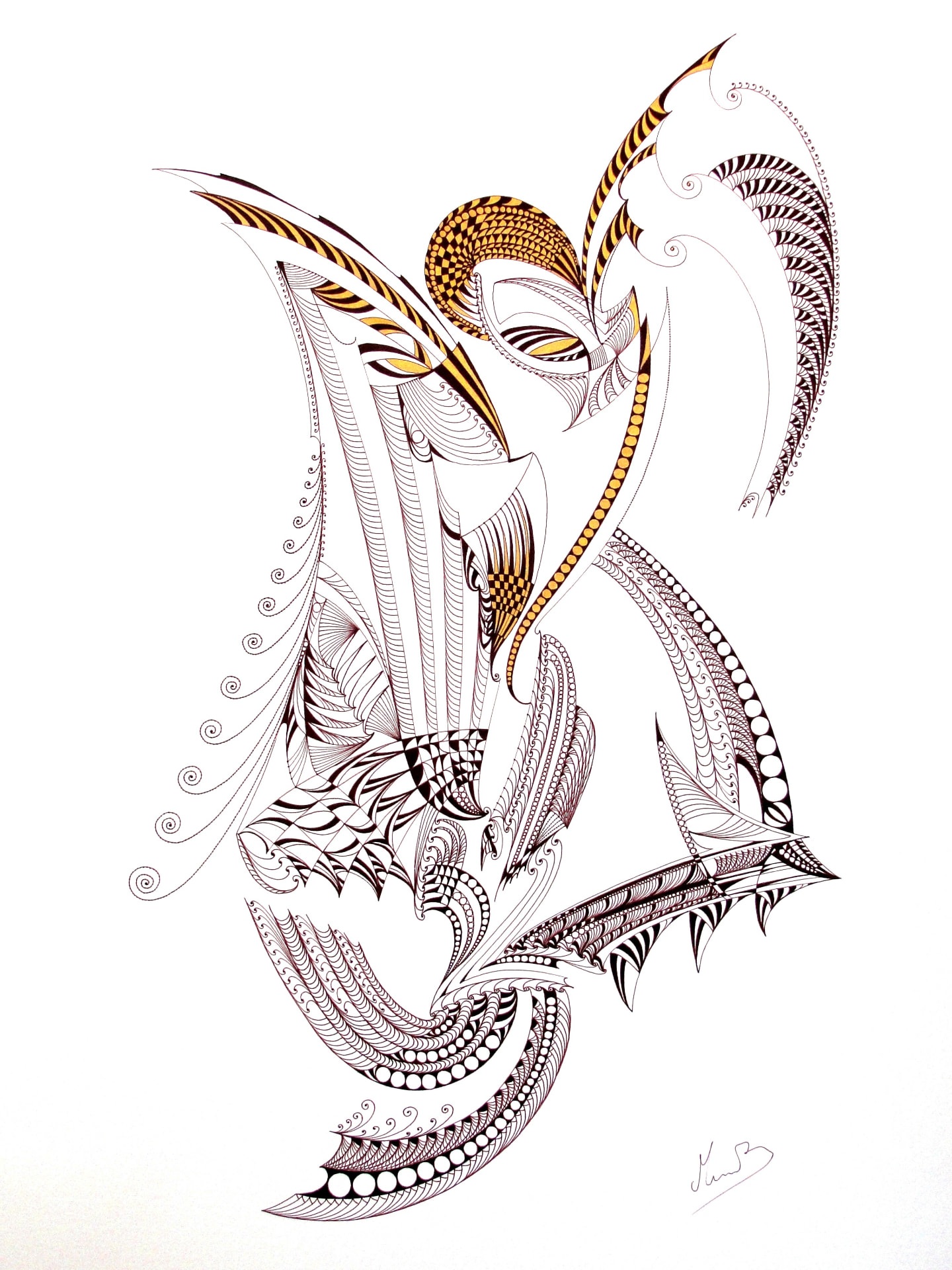
ILLUSIONISTA offers another register of the artist’s work. Its intricate lines, figurative suggestions and gold-and-brown accents bring an intimate scale of looking to the feature. Read alongside the saloon renderings, it makes the collaboration’s artistic vocabulary more tangible without implying that every supplied artwork is a confirmed onboard commission.
The distinction from conventional decoration is one of timing and intention. When artwork enters the conversation early, its scale, position and relationship with light can be considered alongside furnishings, sightlines and circulation. Art is no longer simply a final object placed in an otherwise resolved room.
BEYOND DECORATION
The Q140 invites a more personal definition of luxury. Premium materials and technical sophistication remain important, but the design’s more interesting ambition is coherence: the possibility that architecture, furnishings, artwork and the surrounding water can be experienced as parts of one considered environment.
That coherence is not produced by ornament alone. A room can be richly furnished yet lack a convincing relationship between its elements. Conversely, a carefully positioned work, a well-resolved view and a measured transition to an outdoor space can give a vessel a character that is not dependent on accumulation.
Customisation, approached this way, becomes a process rather than a catalogue. An owner’s preferences inform the atmosphere of the environment, while the designer’s task is to preserve proportion, continuity and clarity. Original art can contribute a focal point and a more individual connection with the space.
The sea gives that relationship an unusual vitality. Sunlight changes across surfaces, reflections move through rooms and the horizon becomes a living element of the interior. Art aboard a yacht is encountered within this shifting visual field, not against the stable backdrop of a gallery.
THE ARCHITECTURE OF A YACHTING EXPERIENCE
Ultimate Catamarans supplies the development vision and platform; Antonio Luxardo establishes the exterior and interior identity; MARCAPIANO brings original art into the proposal, with Erica Broilo contributing art direction. Their relationship suggests an integrated approach to bespoke yacht design rather than three disciplines operating in isolation.
For WAAR, the relevance extends beyond marine design. Thoughtful spatial planning, individual expression and the considered integration of art also matter in private residences and hospitality. The Q140 translates those concerns into a setting defined by movement, light and the sea.
Its eventual achievement will depend on how the proposition is realised. Renderings can communicate an ambition, but construction quality, technical resolution and the experience of life aboard must substantiate it. At this stage, the project’s contribution is a clear creative direction: a yacht conceived as an inhabitable environment rather than a collection of luxury amenities.
The most memorable spaces are rarely explained by scale alone. They are distinguished by the care with which they are imagined, the precision with which they are realised and the feeling they create. The Q140 brings those ambitions into a contemporary yachting concept where architecture and art are invited to share the horizon.
Credit
Dott.ssa ERICA BROILO
Art and Cultural Manager.
Art Director of Marcapiano Ars.