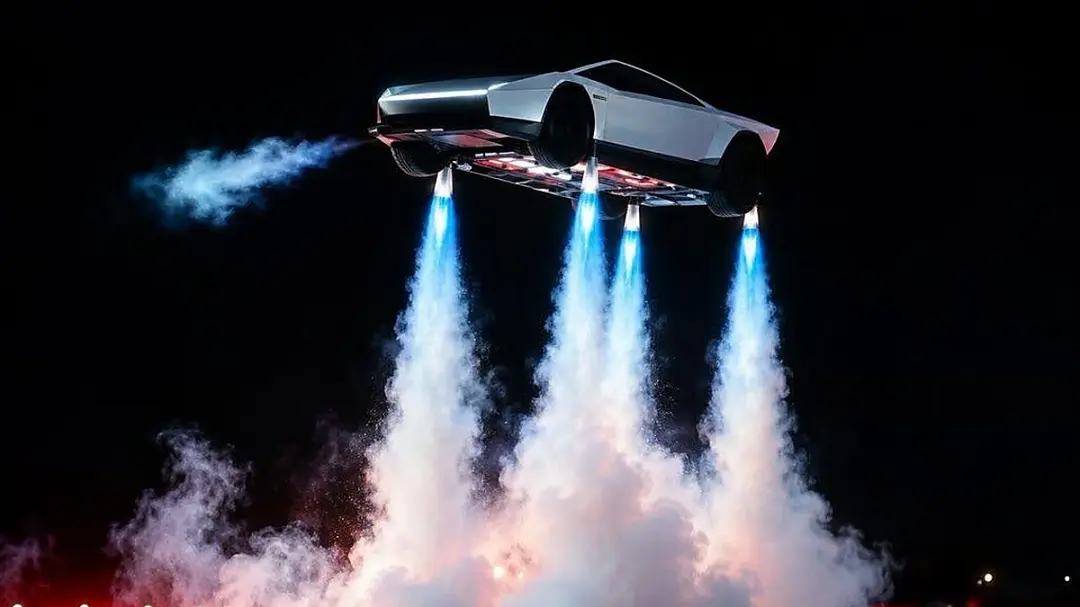
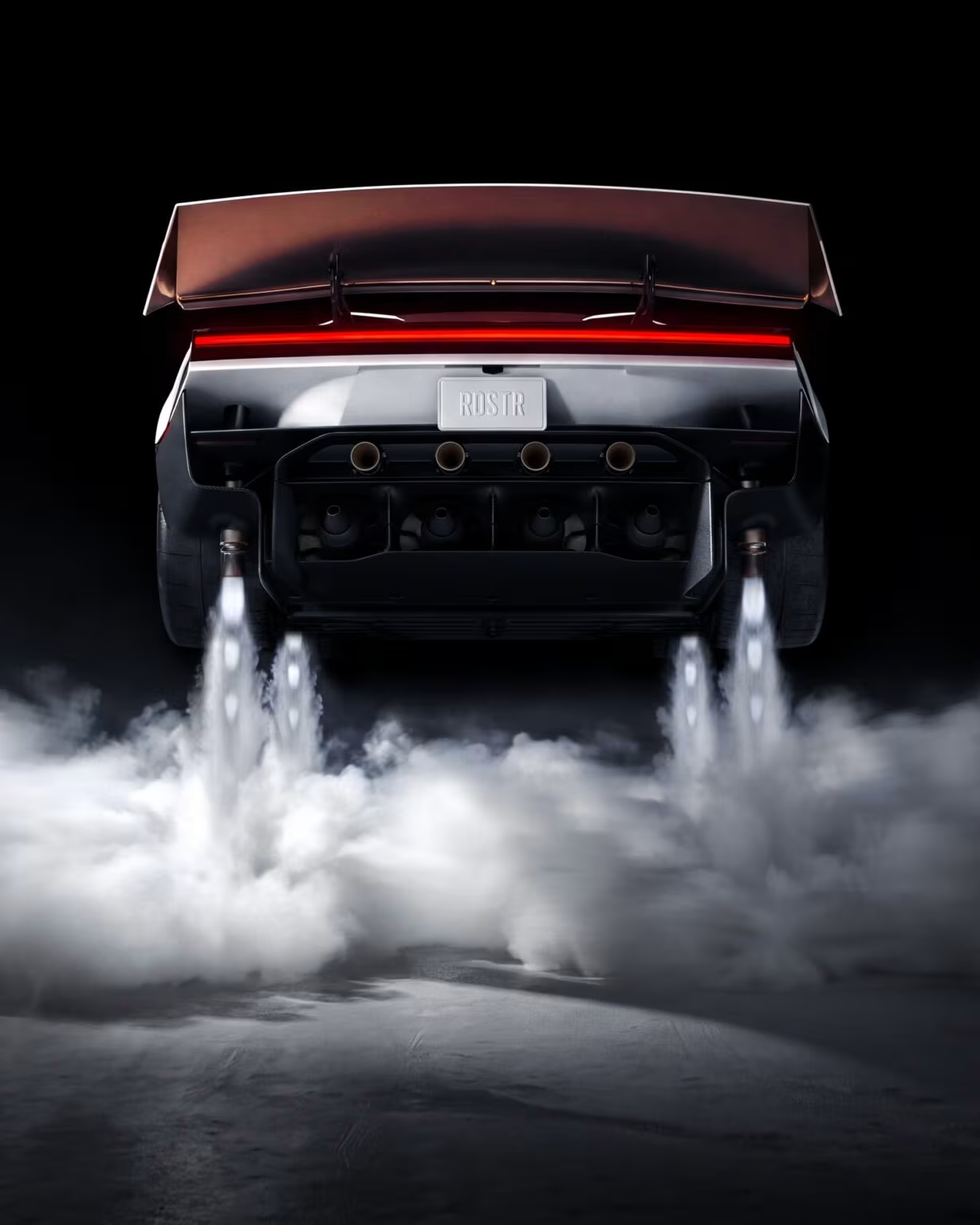
The Roadster prototype lifting off on bursts of gas thrust: a performance car briefly measured in altitude rather than speed alone.
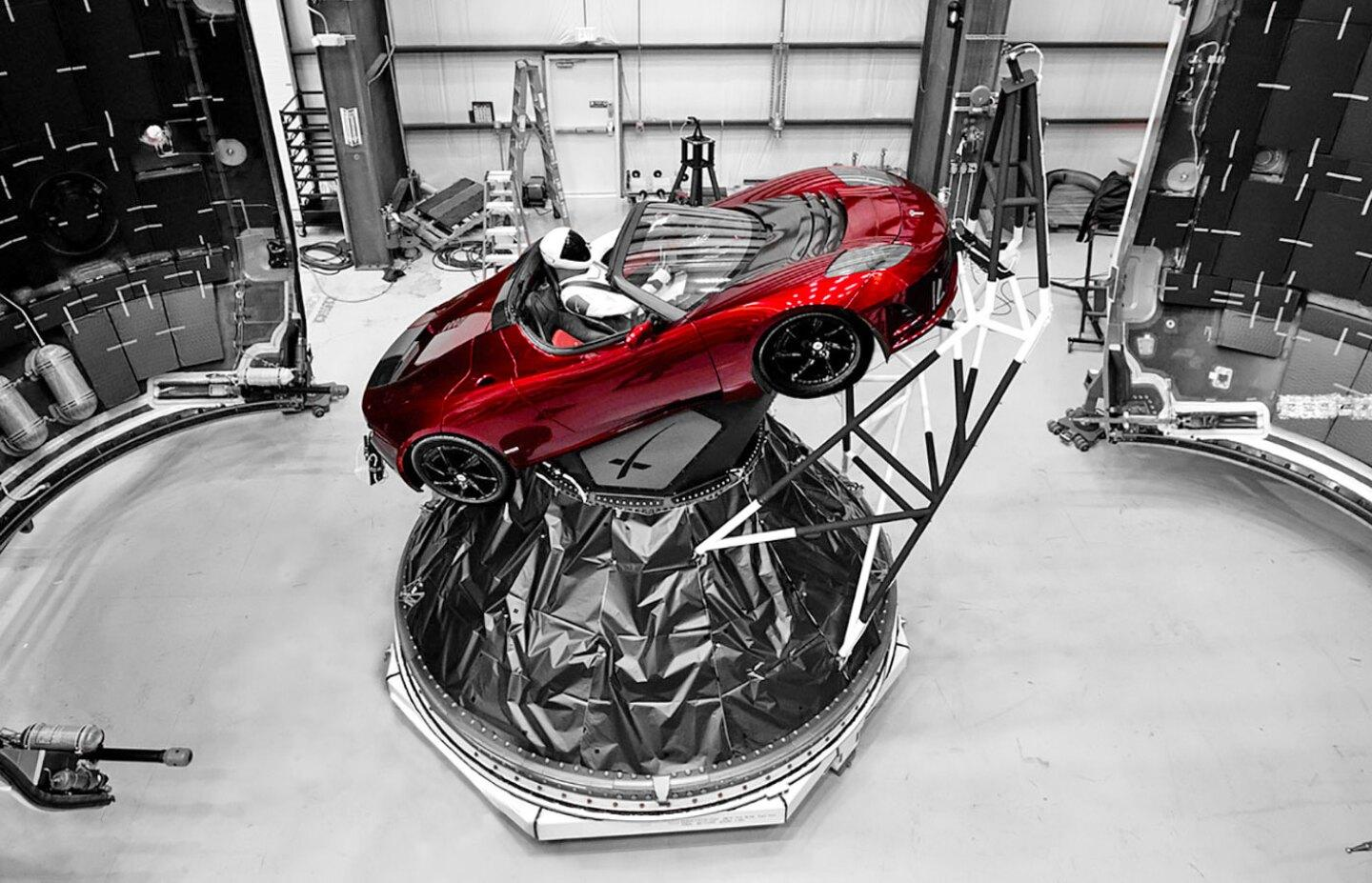
A Tesla Roadster prepared as the payload of SpaceX's Falcon Heavy in 2018 — an early sign of the bond between the two companies that the new car now makes literal.
A low, continuous silhouette: on the ground, the Roadster remains a high-performance electric sports car. Illustrative image.
Tesla Roadster: Reimagining the Future of the Automobile
WAAR Editorial · 3 min read
For generations, the flying car has occupied a curious position in the human imagination. It has appeared in science fiction, futuristic city illustrations and ambitious engineering experiments, often representing a world in which mobility is no longer restricted by roads, bridges or conventional infrastructure. Now, Tesla is bringing that idea into a very different conversation.
On 15 October 2026, at a demonstration hosted at a SpaceX facility in Texas, Elon Musk unveiled the next-generation Tesla Roadster, presenting a vehicle equipped with technology designed to propel it briefly into the air. The moment brought automotive performance and rocket-inspired propulsion together in a single concept.
Beyond the conventional automobile. The new Roadster's most remarkable proposition lies in its relationship with SpaceX. Rather than relying on aerodynamic lift or the vertical rotors associated with emerging flying-taxi concepts, the vehicle incorporates high-pressure gas propulsion developed with SpaceX, intended to deliver bursts of thrust that allow the car to lift off, perform controlled aerial manoeuvres and return to the ground.
During the unveiling, a prototype travelled up a specially constructed curved ramp, appeared upside down before launching into the air, performed a mid-air manoeuvre and landed on its wheels. The demonstration was remotely controlled rather than carrying a driver.
The distinction is important: the demonstration established the prototype's ability to perform short aerial stunts, not sustained flight comparable to an aircraft.
The engineering of a new experience. Beyond its aerial ambitions, the Roadster remains a high-performance electric sports car. Tesla has presented ambitious targets, including acceleration from zero to 60 mph in less than one second, combining electric propulsion, aerodynamic design and specialised thrust technology across different versions.
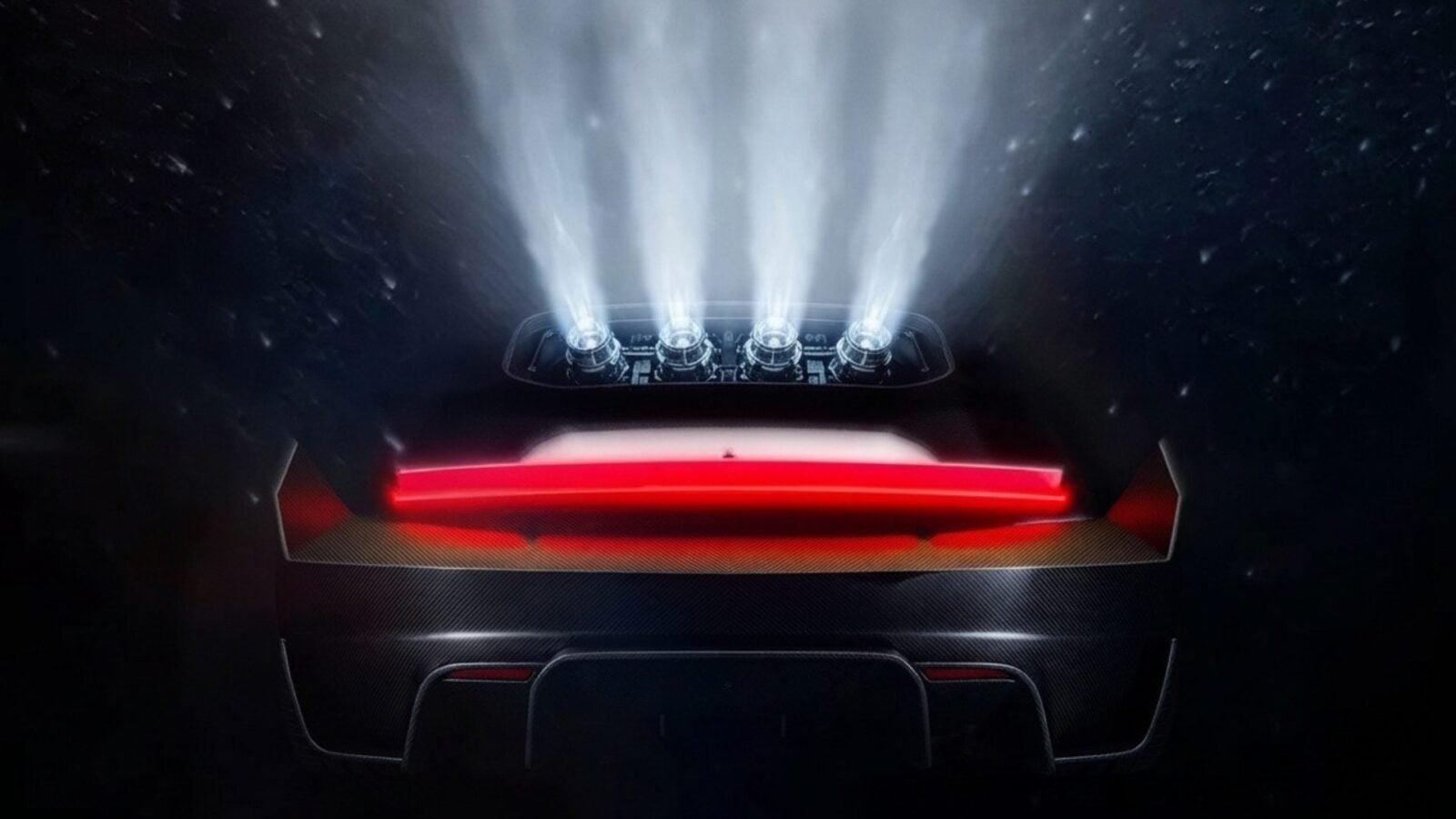
The proposed Rocket configuration is the most distinctive, intended to incorporate a more comprehensive flight system, while the more conventional configurations retain the identity of a high-performance electric sports car. Tesla is not simply building another electric vehicle; it is exploring how technologies developed for different transport environments might converge in one product.
The significance is not that the automobile will replace the aircraft, but that technologies traditionally associated with aerospace are beginning to influence the possibilities of personal mobility.
Between spectacle and practical mobility. For all its ambition, the Roadster raises questions that extend well beyond engineering. How will a vehicle capable of aerial manoeuvres be regulated? What safety standards will govern it? And how might it coexist with road traffic and existing aviation systems?
These are not minor considerations. Tesla's published information indicates that the flying Rocket configuration is not approved for public road use, that its full flight-system version is expected to be available by invitation, and that production is planned for 2028. Final specifications, pricing and regulatory approvals remain outstanding — as do the challenges of flight stability, noise, operational safety and airspace regulation. Nevertheless, the demonstration has moved the conversation from theoretical speculation into experimental engineering.
A new chapter in the architecture of mobility. For architects, urban planners and developers, vehicles that can move between road and air raise questions about the future design of cities. Rooftop mobility infrastructure, private landing facilities, integrated transport hubs and new approaches to vertical circulation could become increasingly relevant as aerial technologies mature.
The relationship between buildings and mobility has always shaped cities. Railway stations, airports, highways and transport developments have influenced everything from master planning to property values. If personal aerial mobility becomes commercially viable, the implications could extend to residential developments, hospitality destinations and commercial districts alike.
Yet the Roadster is not evidence that flying cars will become a practical feature of everyday urban transport. It is an early indication of how far the ambition of personal mobility might extend.
The road ahead. Whether its flying capabilities translate into a commercially viable product remains to be seen; the production timeline, regulatory framework and real-world performance will decide whether this demonstration becomes a meaningful milestone in transport history.
But one thing is increasingly apparent: the future of mobility will not necessarily be defined by the road alone. For an industry accustomed to measuring progress in horsepower, acceleration and range, Tesla has introduced a different proposition — that the next frontier of automotive performance may be measured in altitude. And perhaps that is where the most interesting conversation begins.